

Native Plant Naturalist Hannah McLaren visited the garden of David Riall in Summer 2026. David Riall is a long-time volunteer of Reflection Riding who has been an active supporter of our mission for over 5 years. In his East Ridge home, his garden is the perfect example of how native plants can create a sanctuary for wildlife in urban environments. Read on to explore Hannah’s takeaway from her visit to David’s pristine natural space.
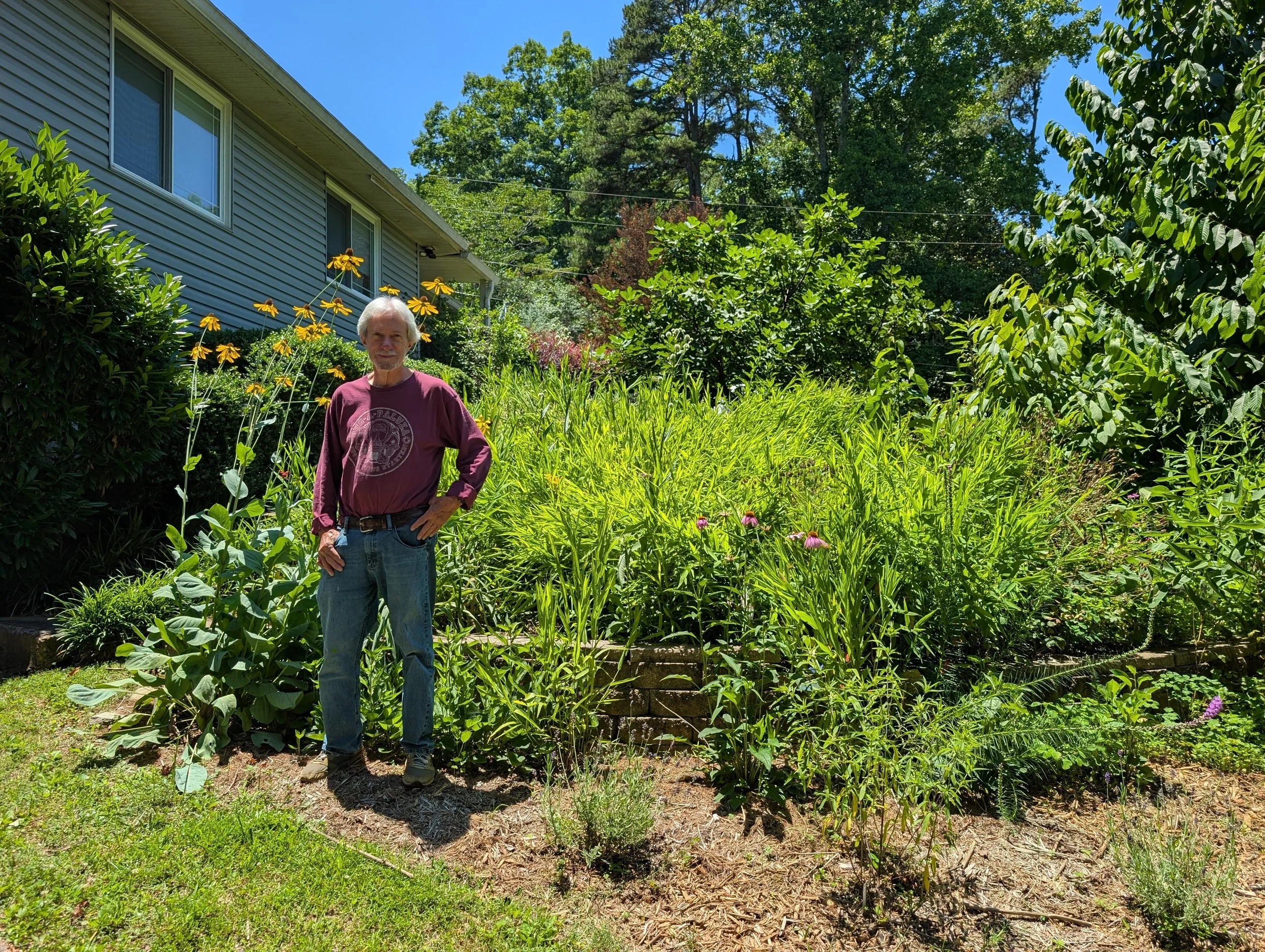
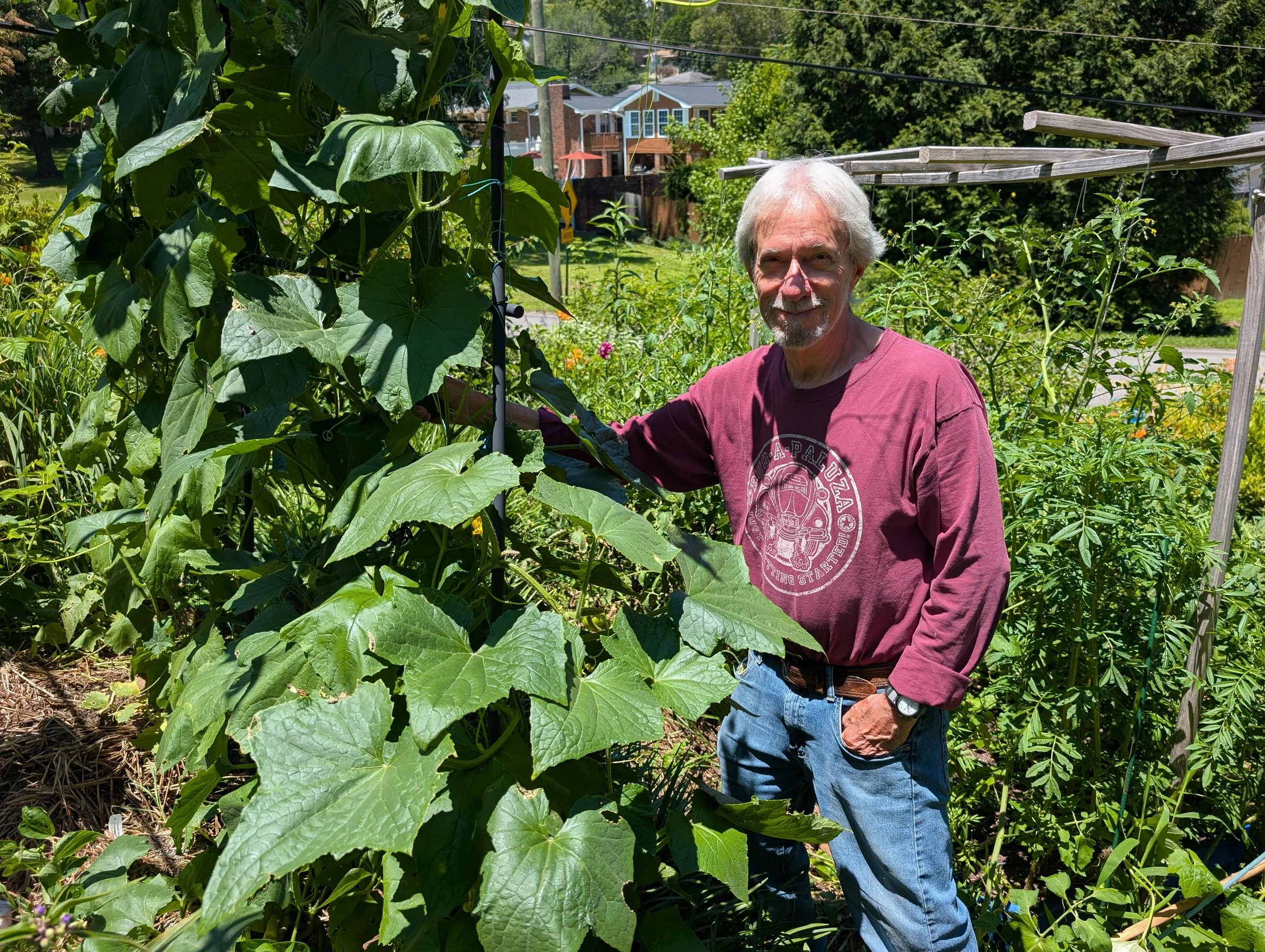
David Riall is an artist, and the world is his canvas. Beyond his career in creating digital art, theater sets, and murals, David is deeply engaged with gardening and volunteering. His East Ridge home is a vibrant blend of food gardens, pollinator-boosting wildflowers, and wildlife-sheltering woods. It is an excellent example of the diversity of life possible on a steep residential lot with clay and rocky soil.
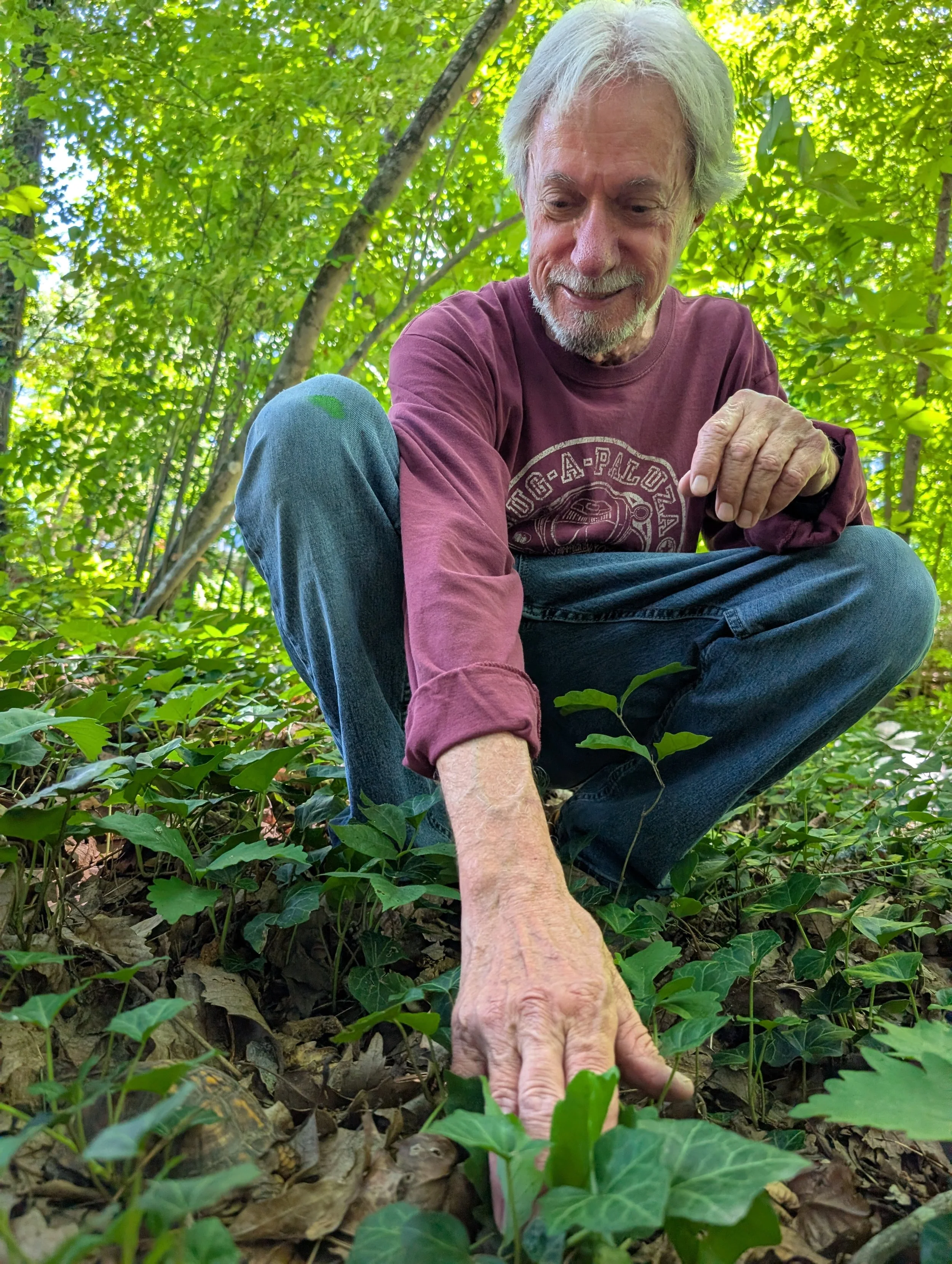
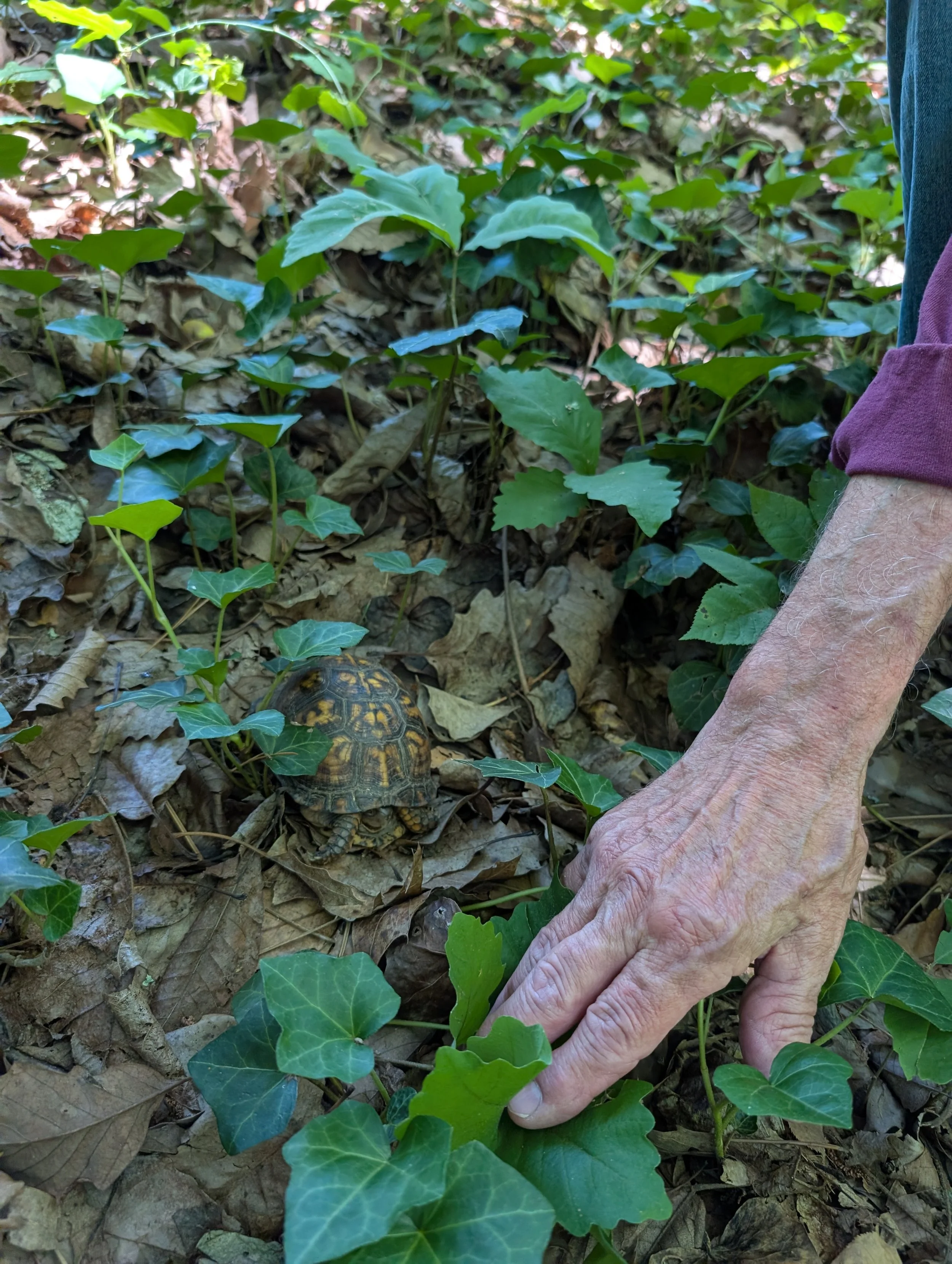
David and Hannah spot an Eastern Box Turtle!
(in the bottom left corner of image)
David has been volunteering with Reflection Riding for over 5 years. He has supported a range of projects here, including invasive species removal, native plant care, and prescribed burns. Standing in his home garden, it is clear he has taken these experiences to heart as a land steward in his own right. “I garden to support nature,” says David.
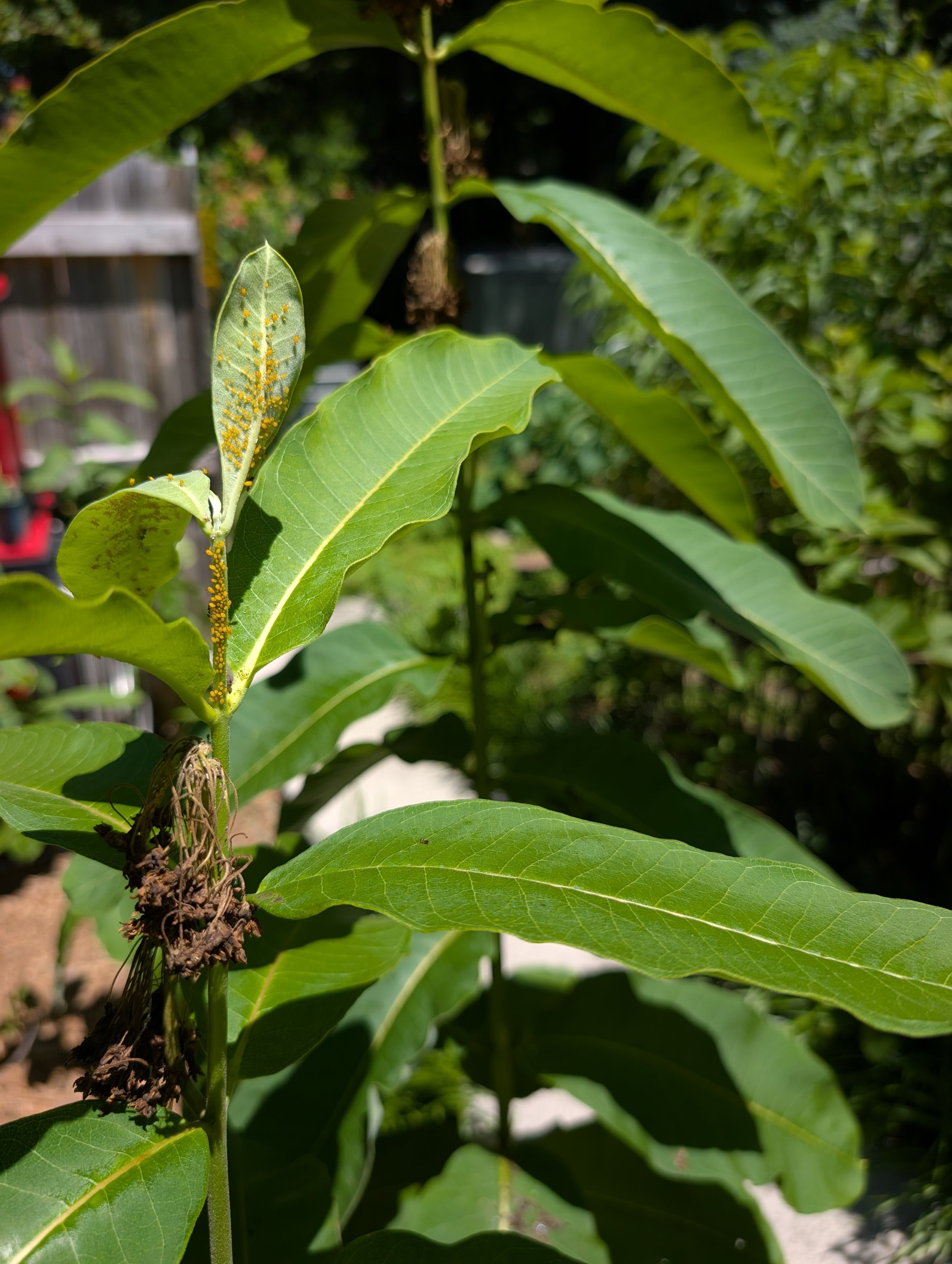
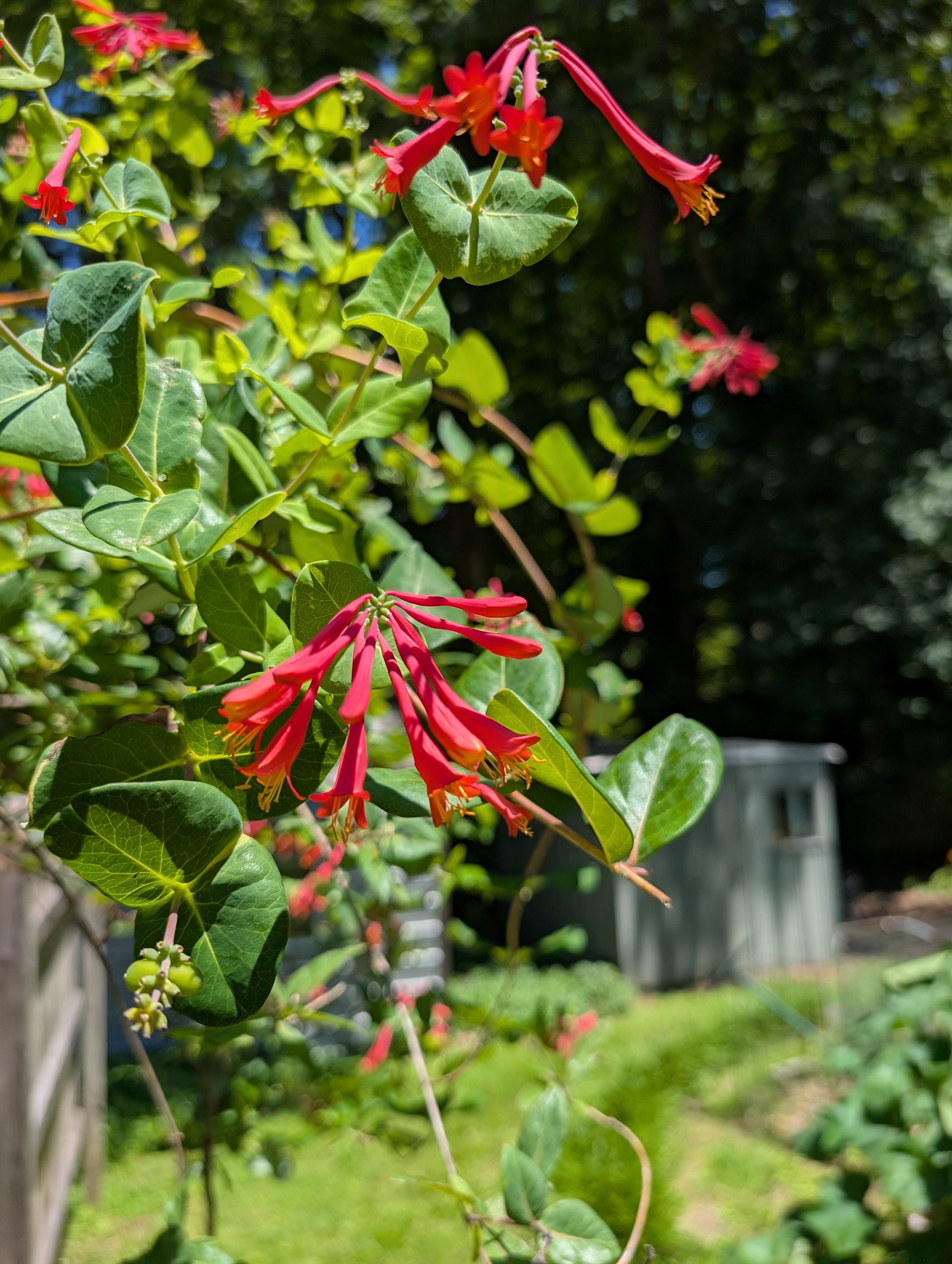
His garden teems with life. We make frequent stops to observe sweat bees pollinating coral honeysuckle or bumble bees on giant coneflower. On his common milkweed, farmer ants guard a herd of aphids-a fascinating example of mutualism in nature! One of David’s meaningful memories in his home is noticing the return of lightning bugs to his garden once he started incorporating native plants. Such abundant insect life is all part of a balanced ecosystem.
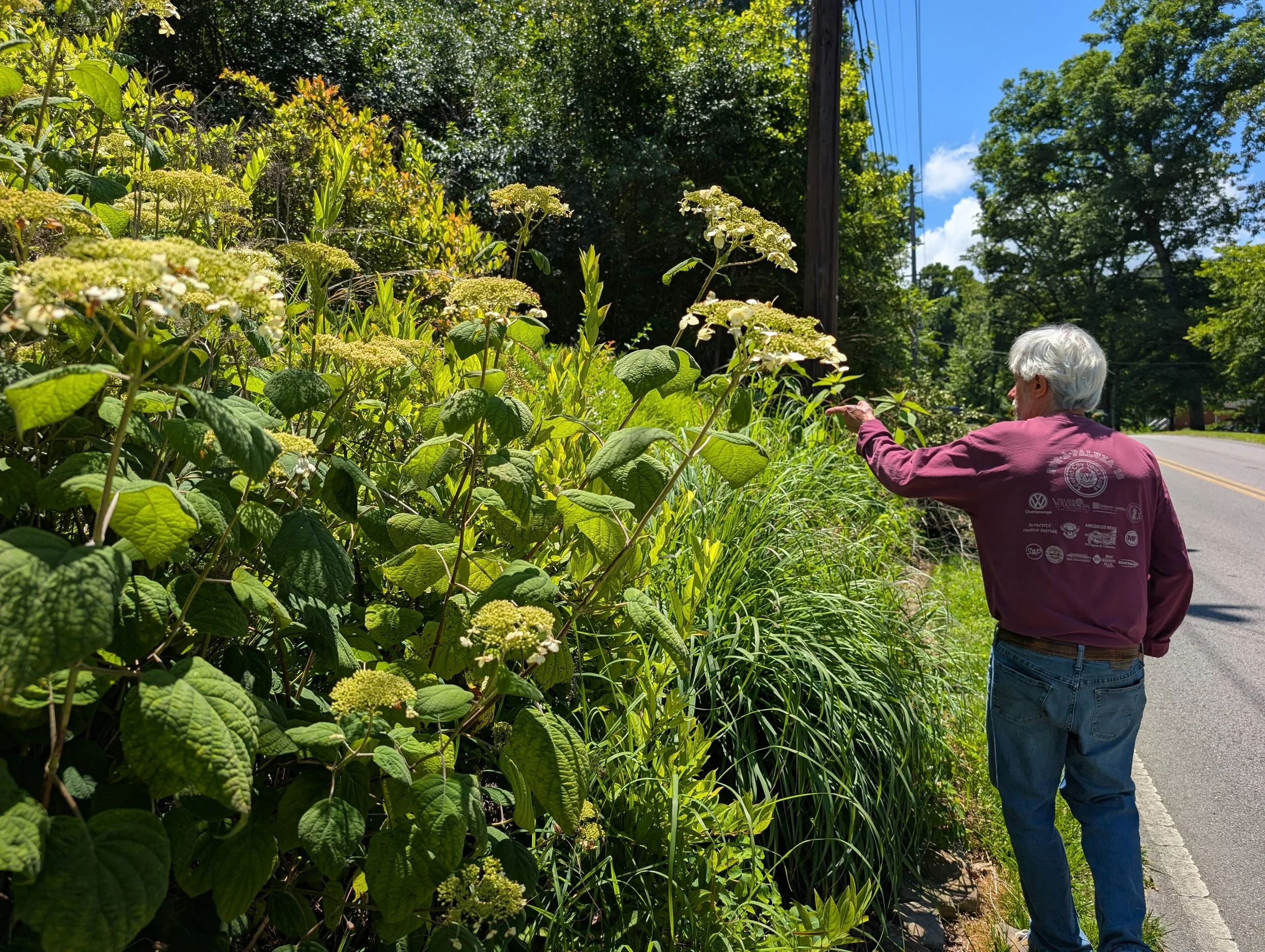
Facing his home from the street, the steep slope of David’s front yard creates a layered display of color and texture. River oats and wild hydrangea in the dappled sunlight border blend upwards towards American beautyberry and wildflowers, drawing the eye to two massive, fruit-laden elderberries. This sunnier section of David’s garden supports a mix of native edibles and food crops. He is also slowly removing his lawn through a process called occultation, in which a black tarp is used to smother grass by blocking sunlight.
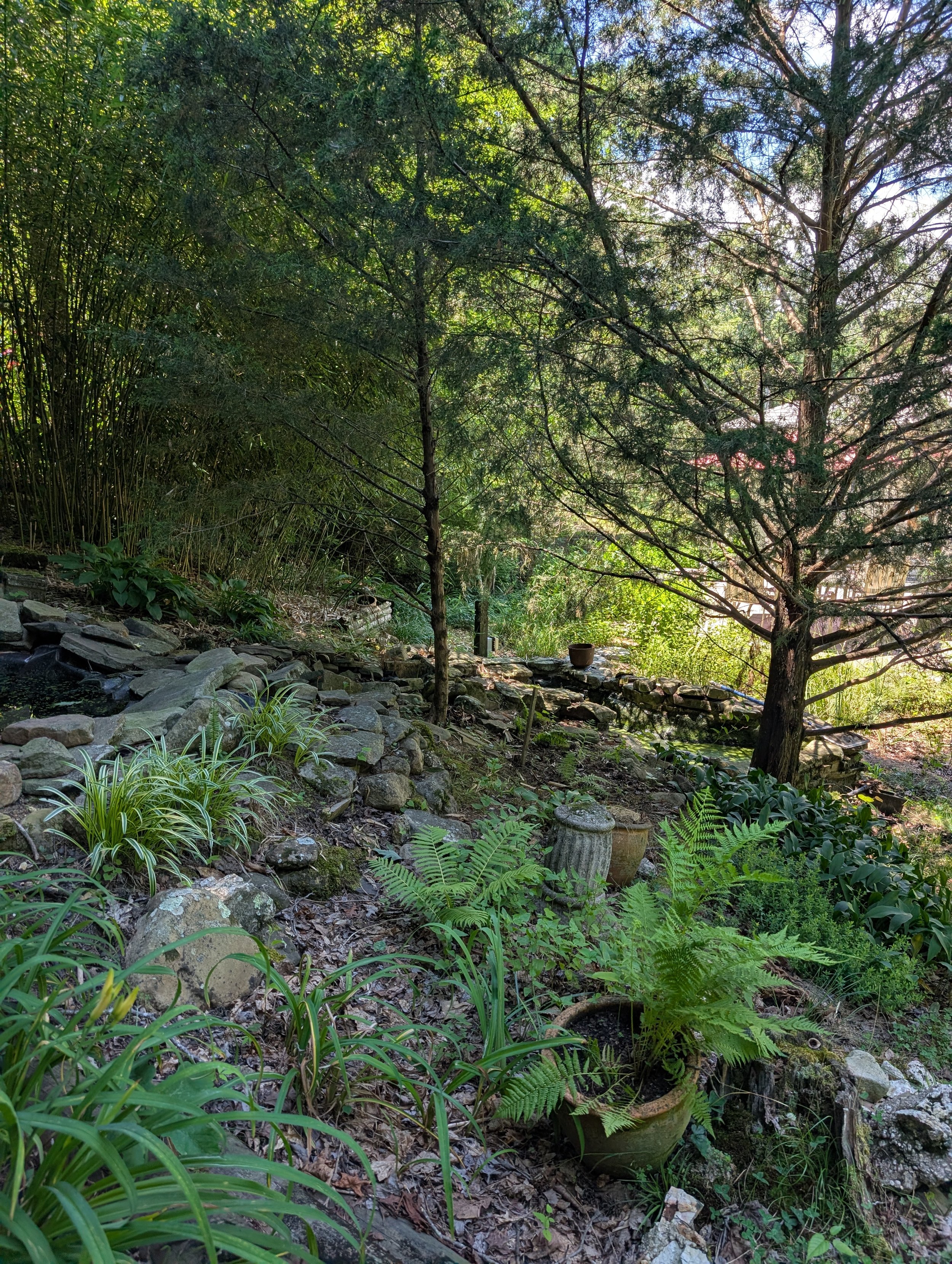
David’s back yard continues to slope upwards towards a shaded woodland garden framed by a manmade water feature. Hemlocks and ferns thrive in this shady, moist environment. Here, David uses stones and stumps as a design element with year-round interest, while also creating habitat for wildlife. He has watched pairs of hawks nest in a standing dead tree stump, and even spotted a snapping turtle in his own backyard. It’s home to many other small mammals and reptiles. In fact, we almost tripped over a box turtle while inspecting its fenceline!
Like many of us gardeners, David’s ongoing battle is removing invasive species from his property. His method for fighting English ivy combines mowing and manual removal. He also chemically treats his hemlocks to protect them against the invasive woolly adelgid. David’s advice for life’s gardening challenges is to let go, and the native plants expand, and to remember that gardening is a journey.
To learn more about the Reflection Flyway and previous mural erected in 2022, check out this blog. The new mural builds upon the original design to encompass an ecosystem-focused approach and stay on track with Welcome Center renovations.