
American Elderberry
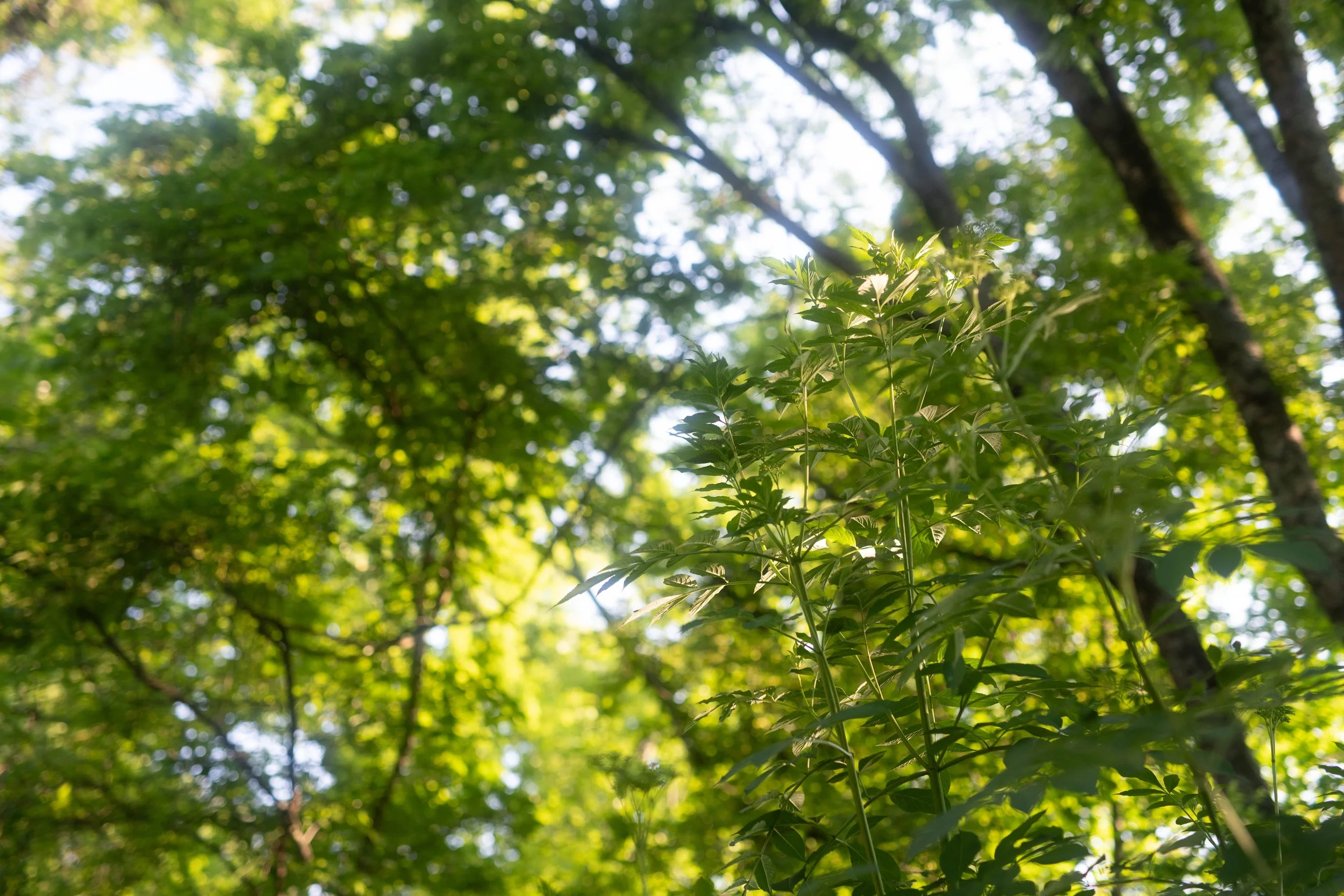
The American Elderberry (Sambucus canadensis) may remind you of the thick purple syrup you take when you're sick, but it is also a beautiful native plant that supports countless wildlife species. It's a deciduous shrub that typically grows to 5-12 feet tall, with graceful, arching branches topped with abundant lace-like flower clusters. These flowers bloom from late spring through mid-summer, and mature into deep purple-black drupes in late summer.
Scientific Description:
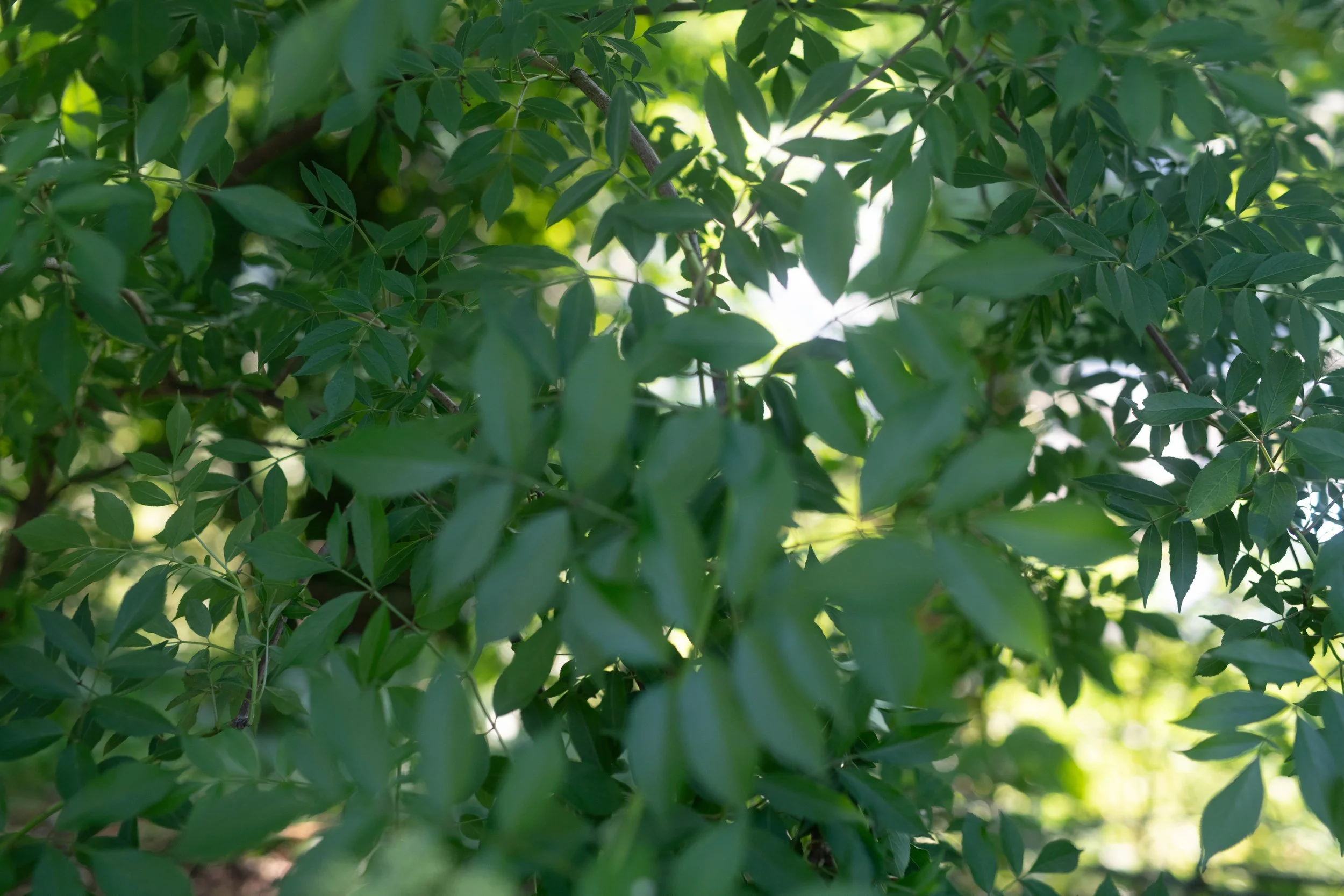
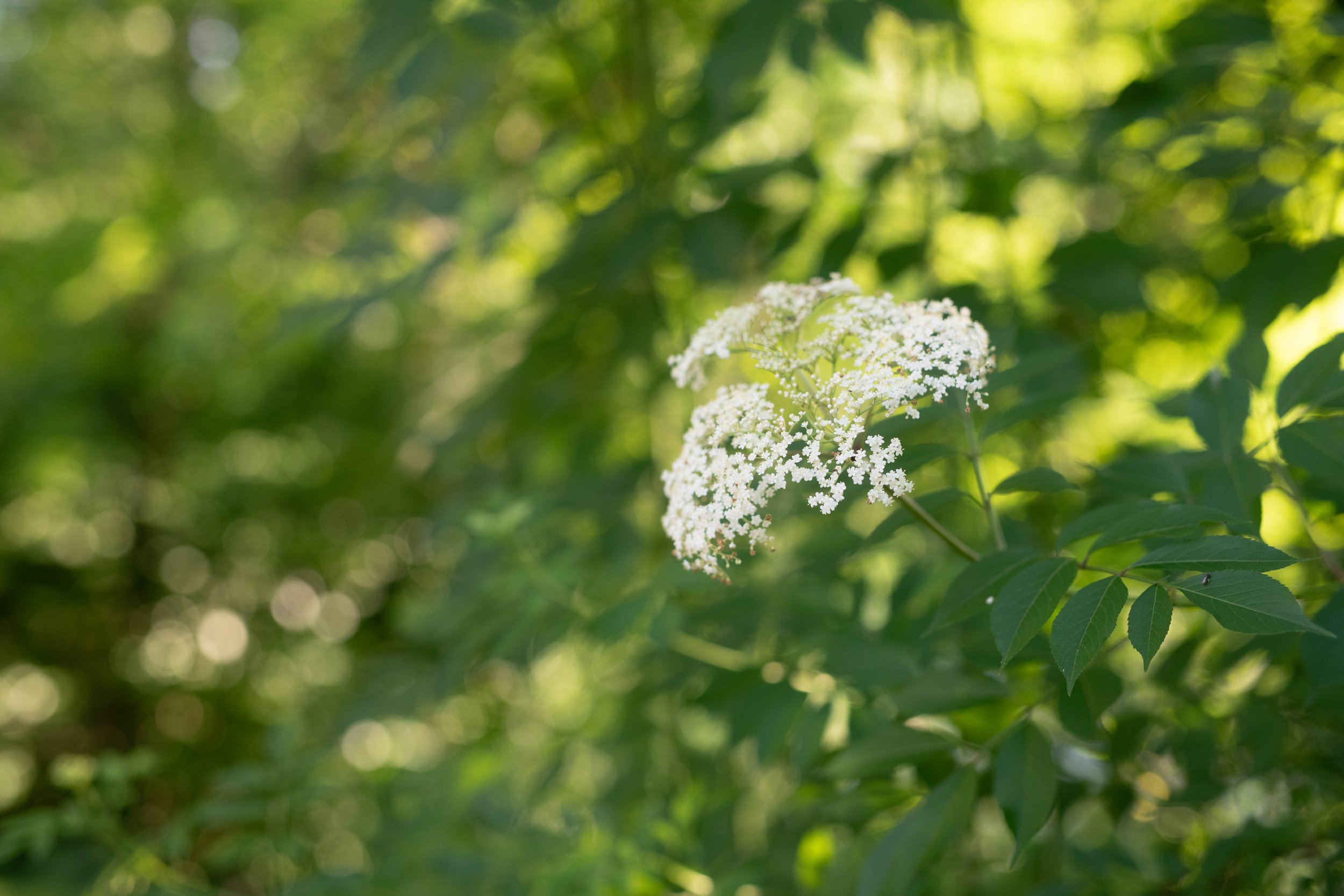
American Elderberry can be found in forest understories or woodland edges throughout most of the eastern US. It prefers moist, well-draining soil and full to part sun. It spreads through root suckers and can form colonies, unlike the non-native European Sambucus nigra, which typically grows up to 20 feet tall and has a more upright, tree-like growth habit. American Elderberry also has flat-topped flower clusters rather than domed flower clusters. They are comprised of several small white flowers. The leaves are oppositely arranged and pinnately compound, meaning they are made up of several individual oval to lance-shaped leaflets. The leaf margins are finely serrated, and the undersides tend to be a paler green than the tops. American elderberry has grey-brown bark with raised, wart-like lenticels. Younger twigs have pithy cores. The mature purple-black fruit often hangs in dense clusters at the ends of the branches.
Habitat Value:
All parts of Sambucus canadensis provide vital support for wildlife. The flowers support over 40 species of pollinators. The fruit is eaten by over 65 songbird species, small mammals, and box turtles. Additionally, the young pithy stems provide nesting habitat for overwintering insects.
Landscape Use:
The cooked fruit and flowers of American Elderberry are also edible for humans. All parts of the plant contain toxic cyanogenic glycosides, which must be cooked out before consuming. Some of the most popular American Elderberry foods are syrups, jams, and teas. In indigenous and folk medicine, American Elderberry was used to treat respiratory conditions, fevers, colds, and joint inflammation, and is still commonly used for immune support today. Additionally, indigenous Californian tribes like the Chumash, Tongva, and Ohlone used the pithy stems of American Elderberry to create hollowed-out percussion instruments called clappersticks.
These uses are just some reasons to include American Elderberry in your landscape. This large, suckering shrub is great in rain gardens, naturalized areas, or hedges. It also responds well to pruning, which can be used to achieve a desired size or shape or to boost blooming. American Elderberry blooms on new wood, so pruning in late winter or early spring while the plant is dormant will produce the best results. American Elderberry requires cross-pollination to produce the most fruit, so avoid clones and look for plants with genetic diversity, such as plants grown from seed or distinct cultivars. This is a resilient plant that can thrive in many soil conditions, but prefers moist, well-draining soil. It thrives in full or part sun, but will have more vigorous blooms in full sun.