

Weed Wrangle ® Chattanooga
Saturday, March 7, 2026
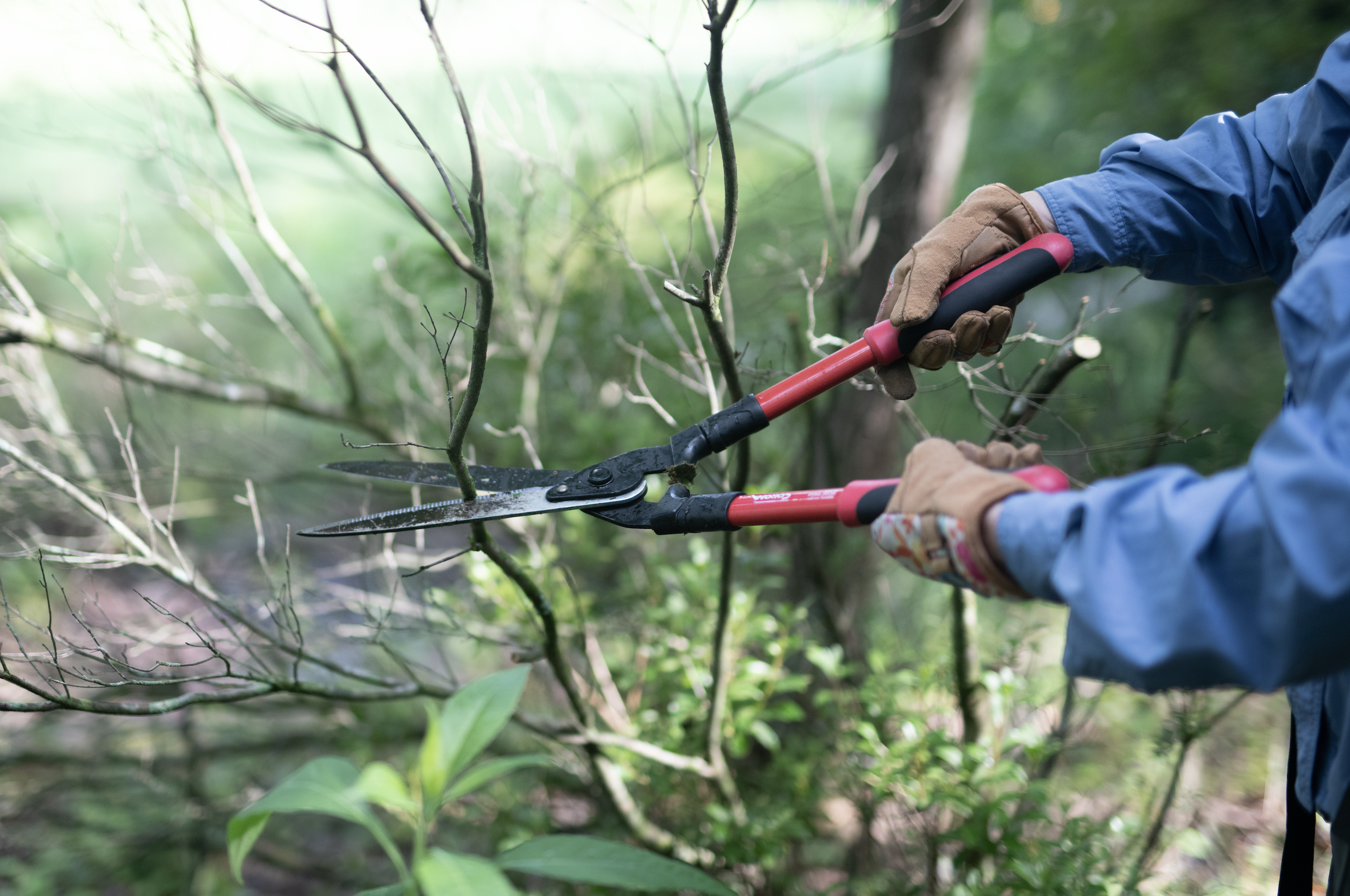
Weed Wrangle® is a one-day volunteer effort that rescues our public parks and green spaces from non-native invasive species through the hands-on removal of harmful trees, vines, and flowering plants. Beyond our local efforts here in Chattanooga, volunteers across the state (and nation!) will gather together to make a difference—one weed at a time.
Supervised by an expert in invasive weed management, Weed Wrangle® volunteers learn, practice and begin a habit of maintaining an area free of non-native invasive plants and encourage replanting with natives in removal areas. By engaging our neighbors and challenging them to take action in their own spaces, we hope to create a movement that will have the greatest impact on the invasive plant population.
Participating Locations in 2026
-
Where: 400 Garden Road, Chattanooga, TN 37419; Meet at the Native Plant Nursery
When: March 7, 2026; 9 AM - 12 PM
Contact: Paul Earle, paul@reflectionriding.org
How to Register: Register at this link.
Targeting: Privet and Honeysuckle in Millison Field
Details: Participants should bring closed-toed shoes, long pants, long-sleeved shirts, and a water bottle. We will have gloves available on-site, but volunteers are welcome to bring their own, as well.
-
Where: 3008 Hamill Road, Hixson, TN, 37343
When: March 7, 2026; 11:30 AM - 2:30 PM
Contact: Kayla Reeves; kreeves@chattanooga.gov
How to Register: Visit this link.
Targeting: Privet, Honeysuckle, English Ivy
Details: Volunteers under the age of 16 must be accompanied by a parent or guardian. Please wear closed-toed shoes, pans, and a long-sleeve shirt. We recommend bringing a reusable water bottle. Parking is located across at Greenway Farm Dog Park. In the event of inclement weather, we may cancel or reschedule.
-
Where: 1604 Taft Highway, Signal Mountain, TN
When: March 7, 2026; 9 AM - 12 PM
Contact: Beth Myers; 330-256-1472
How to Register: No registration required.
Targeting: English Ivy, Privet, Bittersweet, Burning Bush, and Oriental Bittersweet
Details: Meet at the Welcome Station in the parking lot. Bring gloves, a water bottle, and hand pruners or loppers if you have them.
-
Where: Sims Garden Property - 204 McFarland Road, Lookout Mountain, GA, 30750
When: March 7, 2026; 9 AM - 12 PM
Contact: Brad Hutcheson; brad@lookoutmountainconservancy.org
How to Register: Contact Brad Hutcheson at brad@lookoutmountainconservancy.org
-
Where: Audubon Acres; 900 North Sanctuary Road, Chattanooga, TN, 37421
When: March 7, 2026; 9 AM - 1 PM
Contact: Mariela White; mwhite@chattaudubon.org
How to Register: Visit this link.
Targeting: Privet, Honeysuckle, English Ivy
Details: Participants will meet at the Visitor Center. They should bring closed-toed shoes, long pants, long-sleeved shirts, and a water bottle. Gloves, loppers, and privet pullers will be provided but volunteers are welcome to bring their own.
Learn More About Weed Wrangle®
Weed Wrangle® is a grassroots project whose efforts are improved one weed, one volunteer at a time. This project idea emerged in 2015 from discussions between members of The Garden Club of Nashville, a member of The Garden Club of America and the Friends of Warner Parks about the number of invasive weed pulls that were being hosted sporadically around the city of Nashville. The Garden Club of Nashville coordinated efforts of local parks and green spaces to discuss the idea of having a one-day education and eradication event, city-wide, with a media blitz. Years later, this grassroots project is now in multiple states and growing invasively, like a weed!
The Mission
To establish partnerships that connect volunteers and public lands for the purpose of education and eradication of non-native invasive plant species followed with the planned restoration of native plant communities.
The Vision
To promote Weed Wrangle® as a nationwide structure for organizing all eradication events on public lands including national, state and city parks with the goals of increasing participation and public awareness about the threats from non-native invasive species, eradicating those plant populations and replacing them with natives.