
American Beautyberry
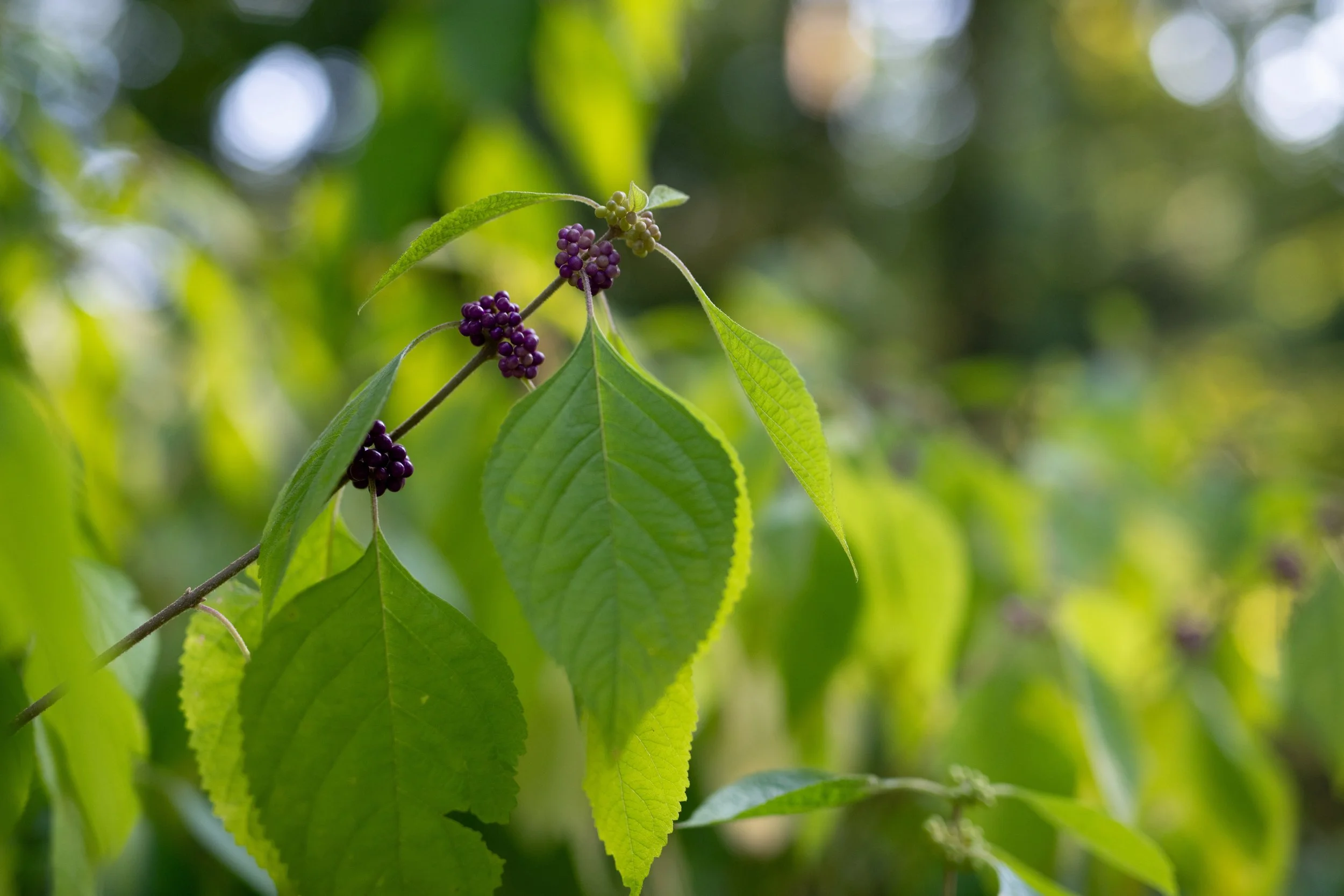
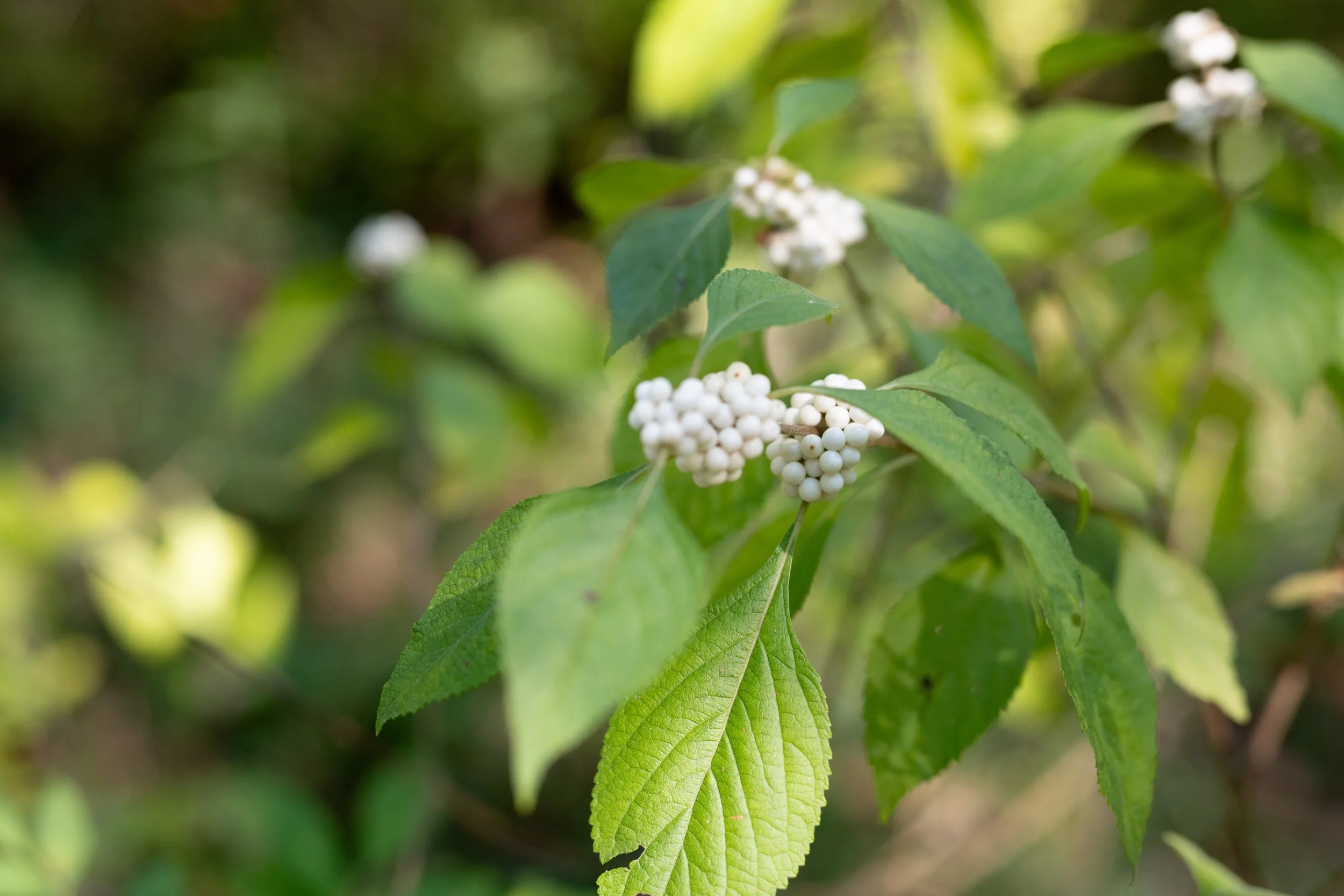
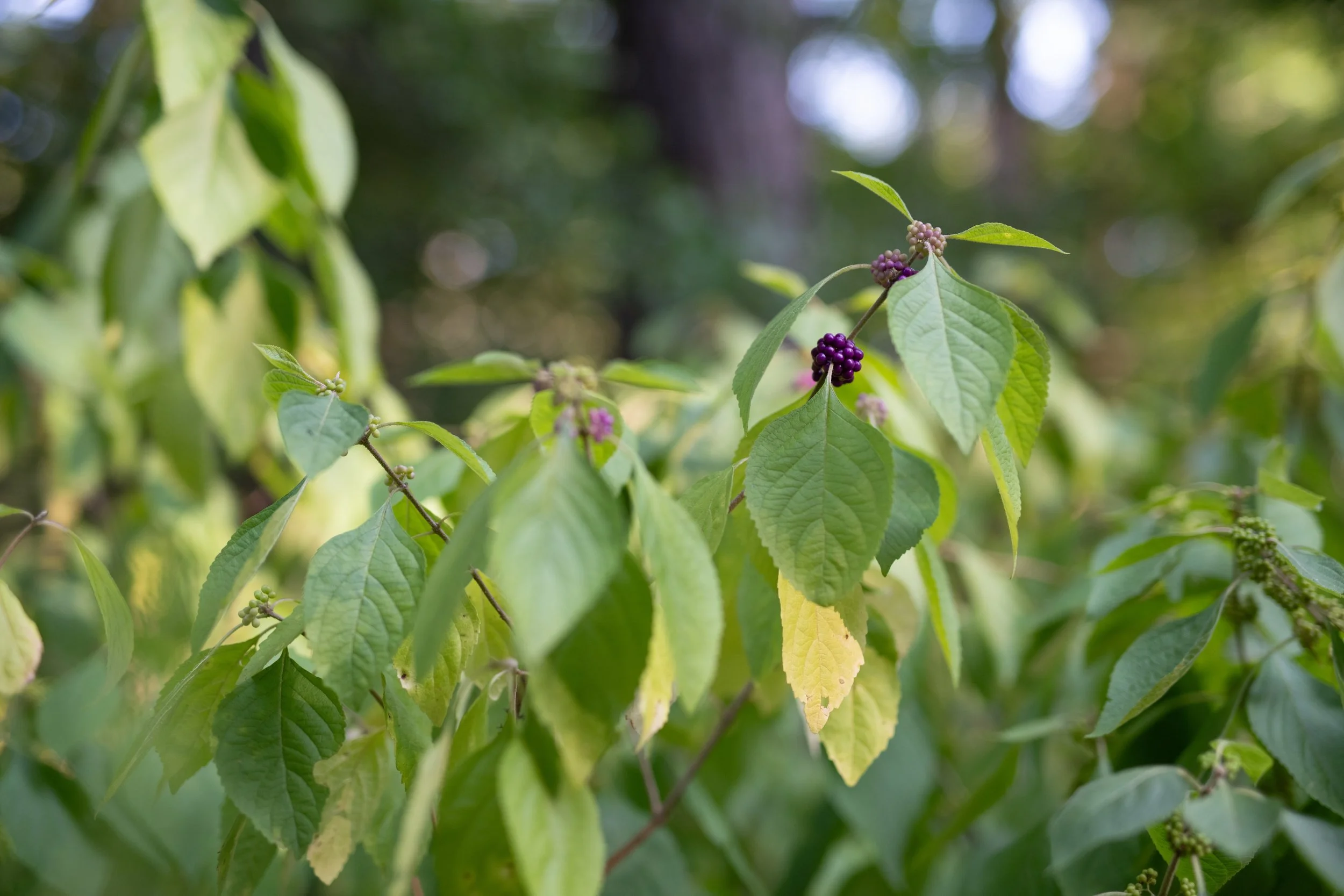
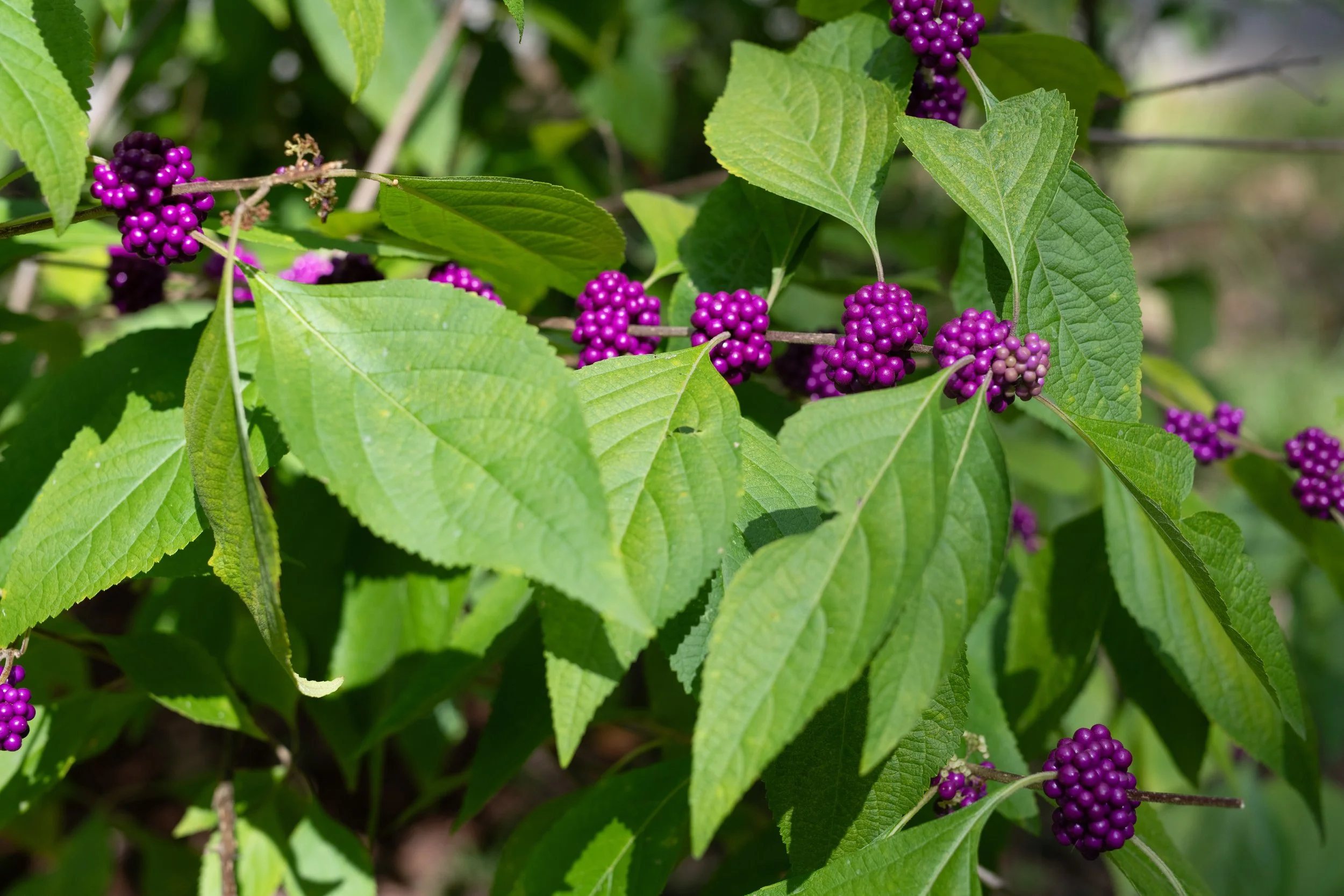
Callicarpa americana, or American Beautyberry, is a 3-6 foot tall deciduous shrub known for its shiny purple berry-like drupes. It can be found in moist woodlands, meadows, or wetland edges, and is also a garden favorite. It's a valuable source of food for wildlife, and the fruit is particularly attractive to birds.
Scientific Description:
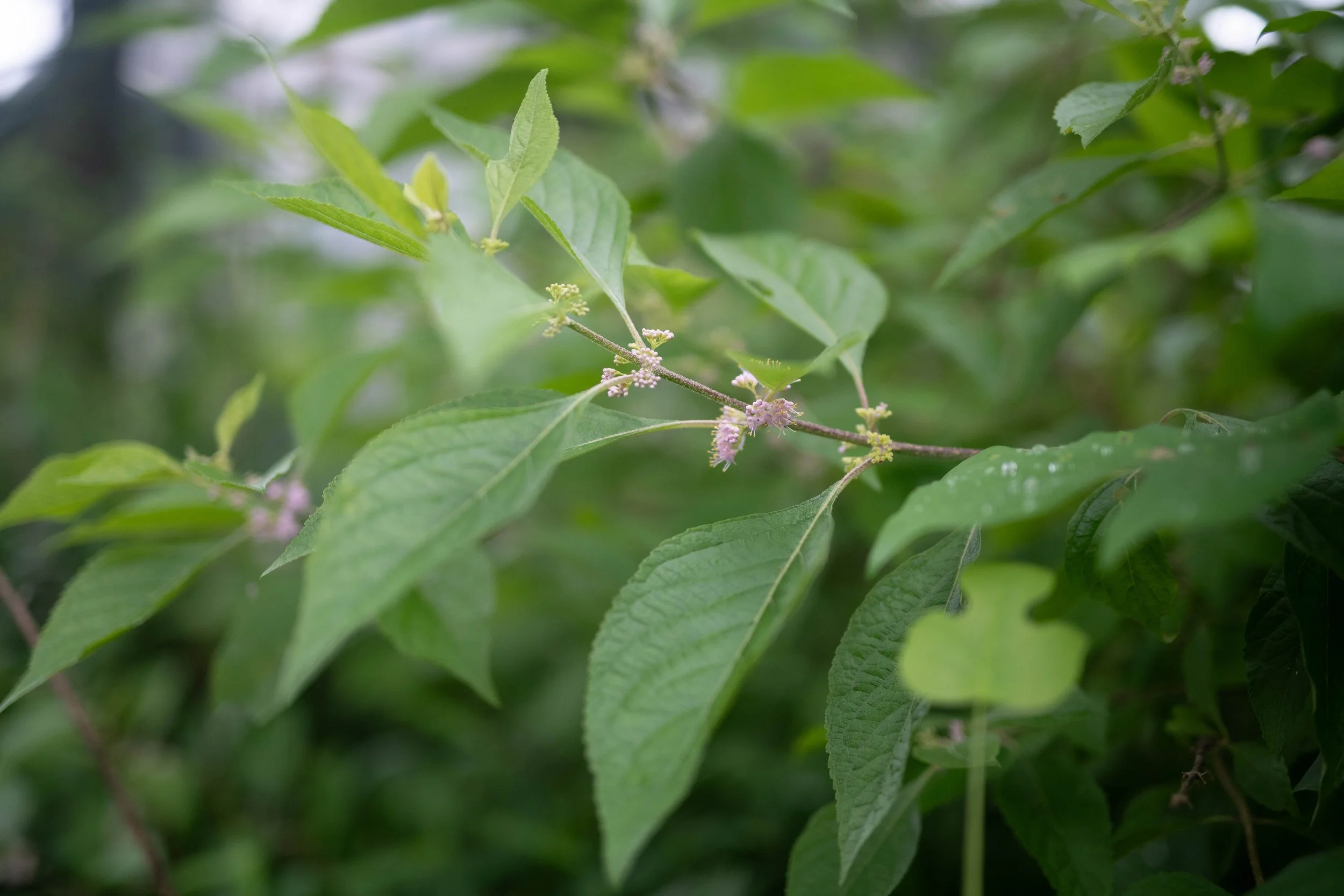
Although previously classified under the verbena family, Callicarpa americana is now in the Lamiaceae, or mint, family. Like other mints, American Beautyberry has a square stem. The bark is light brown on older wood with raised lenticels, reddish brown on younger wood. It has simple, elliptic, coarsely hairy leaves arranged oppositely along the stems. Light pink spring blooms turn to deep purple drupes in the summer and fall. Unlike Chinese or Japanese Beautyberry, the fruit of American Beautyberry wraps all the way around its stem in dense clusters.
Habitat Value:
The drupes of Callicarpa americana can often persist into the winter, making it a valuable food source for wildlife. It is eaten by over 40 bird species, especially songbirds. It is also eaten by the Northern Bobwhite quail, which has declined in population by 97% in the state of Tennessee. Deer and small mammals browse on all parts of the plant. American Beautyberry also supports insects by hosting caterpillars and attracting pollinators with its spring blooms.
Ethnobotanical Use:
The drupes don't taste like much to humans, but can be turned into a delicious jelly! Farmers have historically used crushed leaves to deter mosquitos and ticks. The leaves contain a compound called callicarpenal which acts as a natural insect repellant. The Alabama, Choctaw, Creek, Koasati, Seminole, and other indigenous peoples have used all parts of the plant for medicinal purposes. Ethnobotanical research groups are finding even more compounds in American Beautyberry with the potential to treat MRSA and other skin conditions.
Landscape Use:
American Beautyberry is a resilient and striking shrub, easy to integrate into naturalized gardens. It does best in full sun to partial shade, having fewer blooms in full shade. However, American Beautyberry will grow well in most sites with moist, well-draining soil. This plant is especially valuable for fall interest. American Beautyberry blooms on new wood, so pruning in late winter or early spring can increase flowering. Plant in massed groups to promote cross pollination and boost the showy display of shiny purple fruit. These clustered shrubs make a gorgeous informal hedge. Its elegant arching branches provide structure to understory plantings. It's also suitable for rain gardens and planting along ponds and streams. Pair with fall blooming wildflowers- purple asters to mirror the Beautyberry's purple fruit, or golden hued black-eyed Susans for contrast. American Beautyberry is a wonderful opportunity to get creative in your garden.