

Native or Endemic...and a Plant That is Both
The term “native” is frequently used in regard to plants, but what exactly does it mean - and how does it differ from the term “endemic” plant?
Strawberry Bush
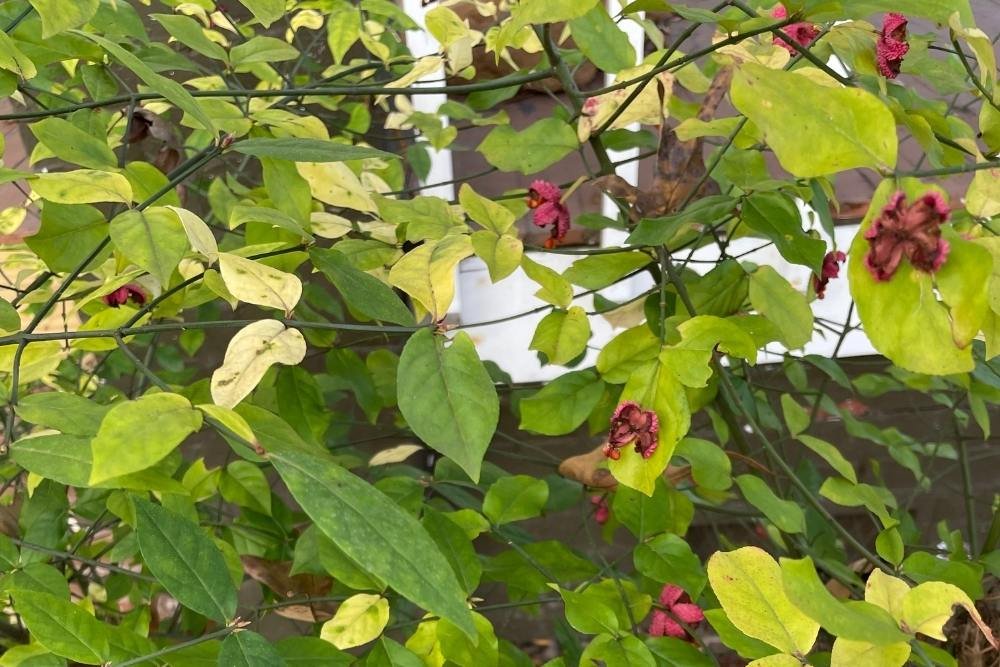
Strawberry Bush – Euonymus americanus – is a deciduous, perennial shrub native to the southern and mid-Atlantic US. It grows to a height of 4 to 12 feet with a similar diameter and makes an excellent background or specimen in the landscape.
Sparkleberry
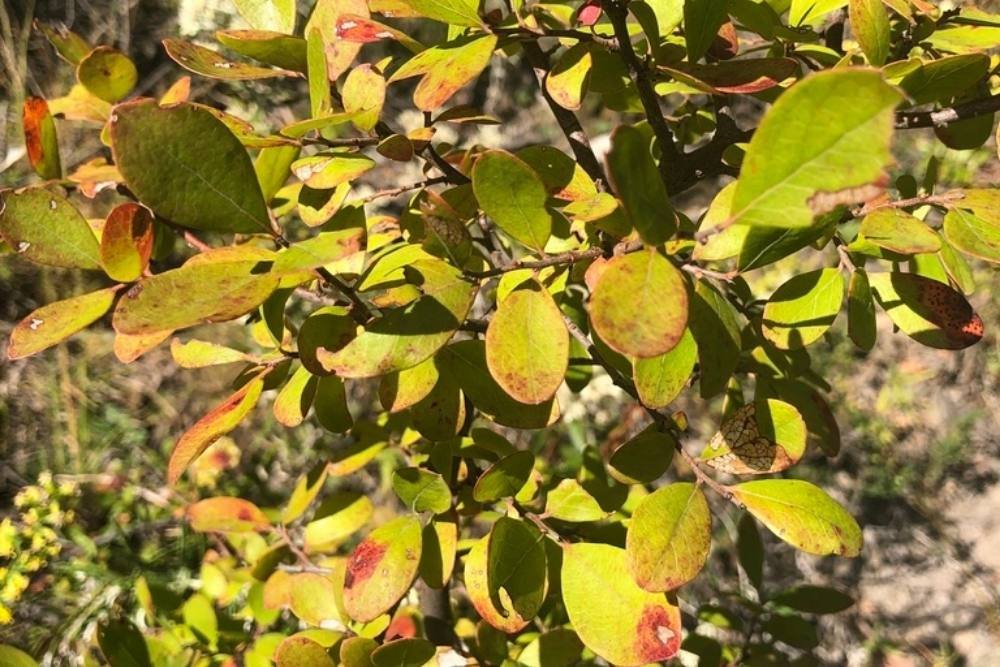
Sparkleberry (Vaccinium arboreum) is a semi-evergreen large shrub or a small tree that is the tallest of the blueberry Genus and grows in the southern United States. Its bright, glossy leaves will turn red to burgundy in the fall, and many will hold on most of the winter. One of its best characteristics is its exfoliating bark, with rich grey, brown, orange, and red often all present on older plants. In late spring or early summer, plants with decent sun become covered in showy, white, bell-shaped flowers. Its heat and drought tolerance are legendary once it is established, and it is one of the most handsome understory native species we have.
White Wood Aster
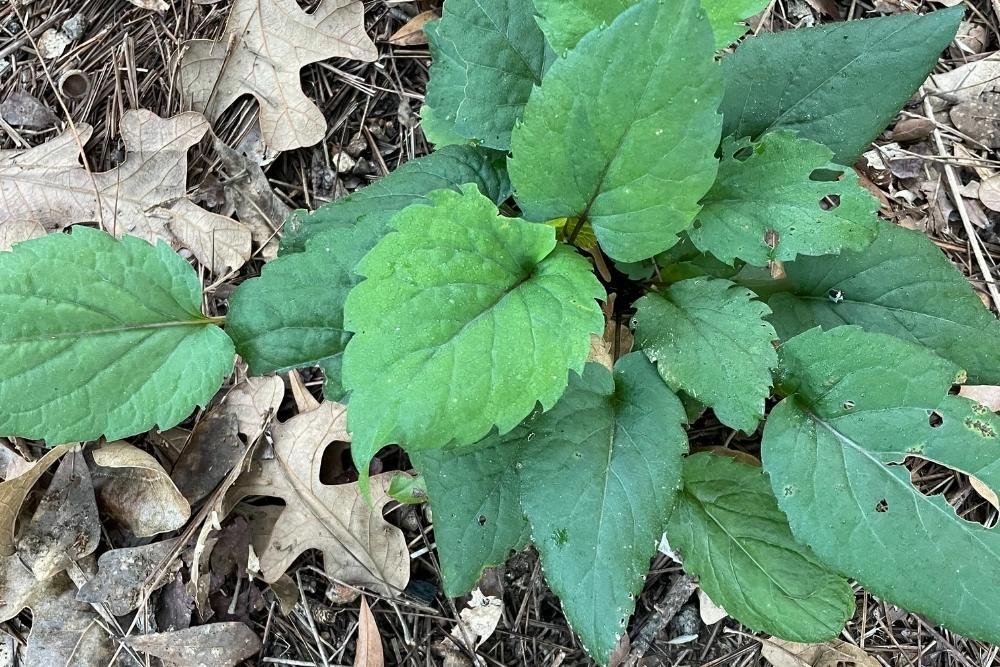
White Wood Aster – Eurybia (Aster) divaricata – is an herbaceous perennial found in the eastern U.S. This plant, with lush green foliage and dark stems, is hard to beat in summer. Then, in the late summer, one tiny white bloom will appear, then two more, until it is covered with white blooms that last for more than a month. Like many asters, it blooms when few other plants do and is invaluable as pollinator forage and for people who enjoy the blooms. Remember this, and never plant a garden without some asters!

The American Chestnut Tree
The American chestnut tree, Castanea dentata (C. dentata) was once one of the most dominant tree species of deciduous forests in the eastern United States. The effort to restore the American chestnut species involves developing American chestnut populations that are resistant to blight.
American Smoketree
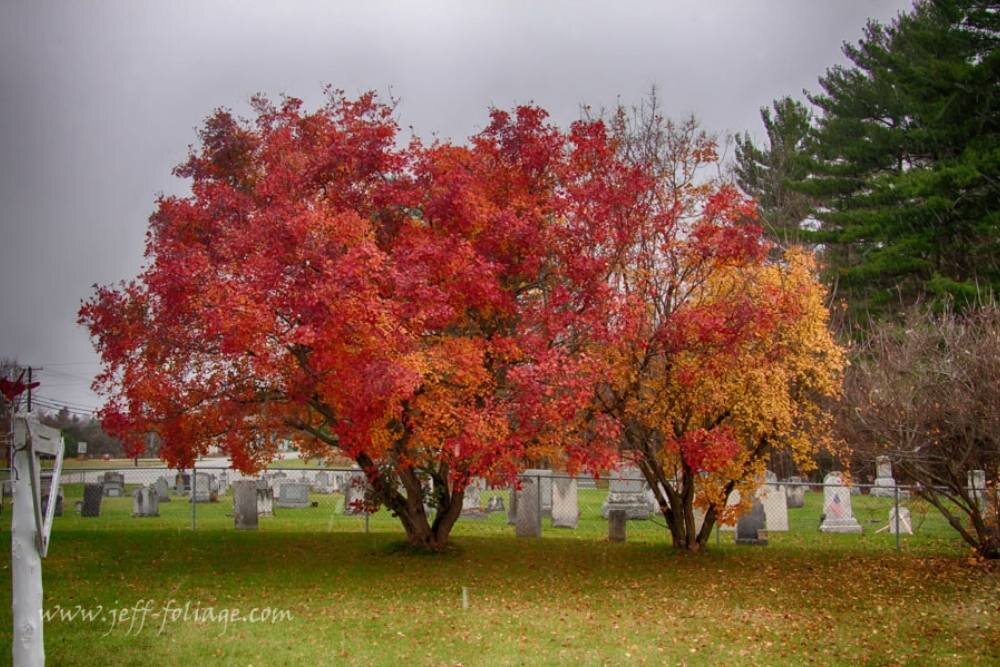
Once abundant in the Southeast, the native American Smoketree (Cotinus obovatus), was detrimentally harvested in large quantities to extract dye during the Civil War Era. The heartwood of the smoketree is a vibrant yellow-orange color that was used in soldiers' uniforms and sashes. Today, it is rare to see a native smoketree in the wild, even on our 300-acre property. One of our only specimens resides on the eastern side of our Upper Pond.

Yellow Anise
Yellow Anise – Illicium parviflorum – is a member of the Schisandraceae and is a large, dense, evergreen shrub native to Florida and the lower southeastern United States, but it does well in Hardiness Zones 6b through 9. it is extremely deer and rabbit resistant, is insect-pollinated, and provides shelter for birds and other wildlife. Yellow anise is in a class of its own: native, evergreen, fast grower, easy to grow, does well in shade.
Aromatic Aster
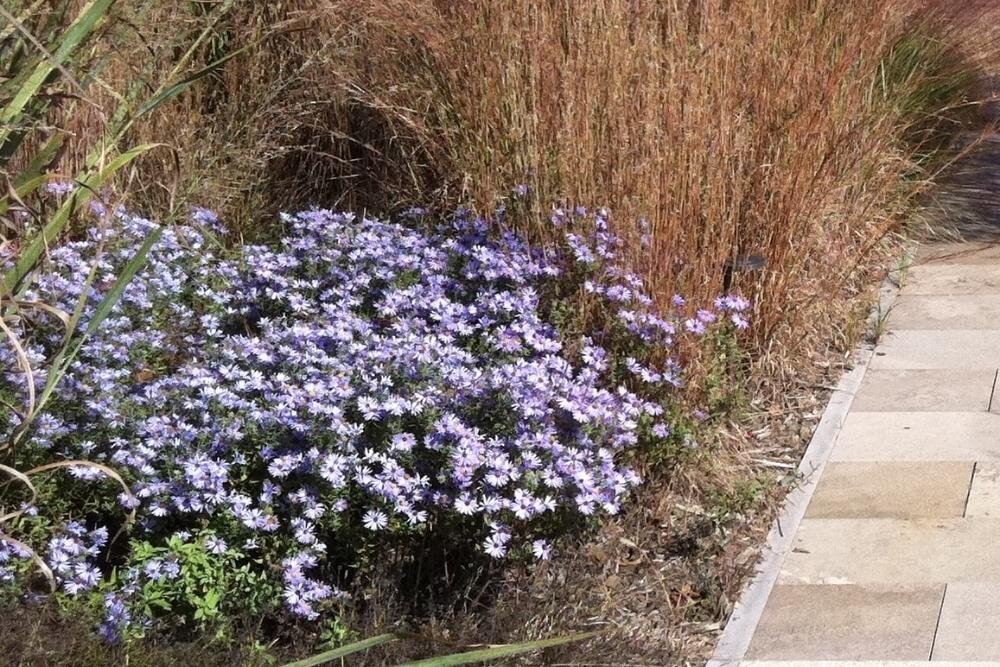
Aromatic aster, Symphyotrichum oblongifolium, is one of our last blooming native flowers providing pollinator forage late into October, when there is little else available. Like many other asters, its blooms are a joy for people who are missing the vast flowers of summer. The leaves, when brushed lightly, release a pleasant fragrance, as the name suggests.
Giant Ironweed
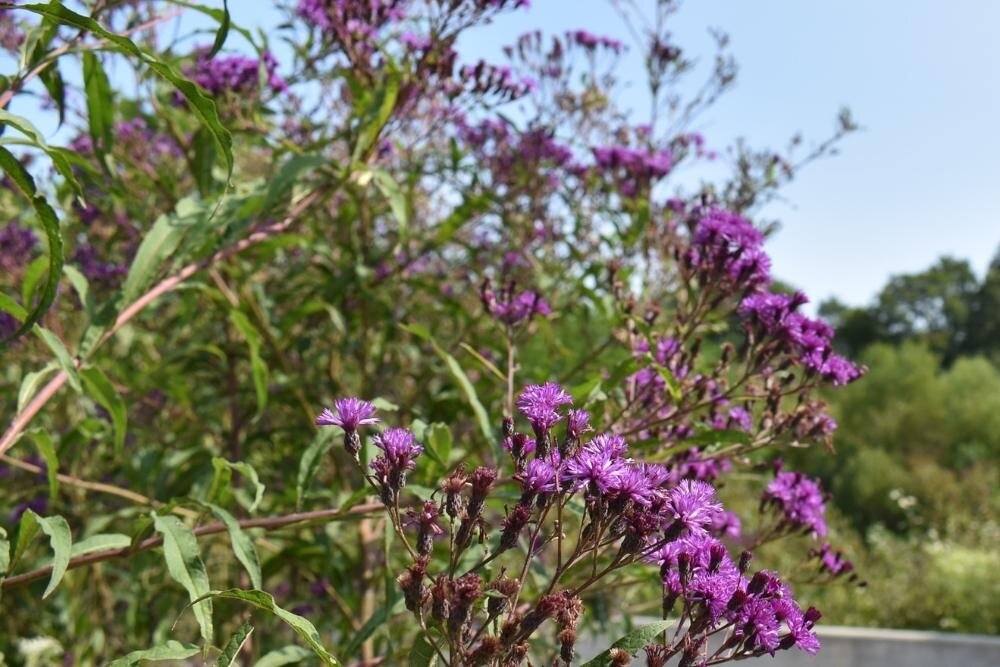
Giant ironweed (Vernonia gigantea) is common statewide, usually in mesic pastures, fields, and thickets. It is considered a facultative wetland indicator plant, meaning it is equally likely to show up in wetlands as in non-wetlands. The nectar of giant ironweed attracts a wide variety of bees, butterflies, and other pollinators, and the blooms make for great butterfly watching. It is best used as a background plant in a larger naturalized planting.

Black Gum/Tupelo Gum/Pepperidge
Black Gum/Tupelo Gum/Pepperidge - Nyssa sylvatica – is a member of the Gum (Nyssaceae) family. It has perhaps the most striking fall color of any native or non-native tree we can plant in the southeast, and the flowers of Nyssa ogeche are the source of the famously delicious Tupelo honey.

Swamp Rose Mallow
Swamp rose mallow is a member of the Mallow (Malvaceae) family, which includes herbs, shrubs, and small trees. There are over 85 genera and 1500 species in this family, some of which are okra (edible), cotton (for apparel), and Rose of Sharron (ornamentals). The flowers of this plant only last one day, but being so conspicuous, they are a wonderful addition to the garden, and they attract many species of bees.
Enjoy Our Lower Meadows in Peak Bloom
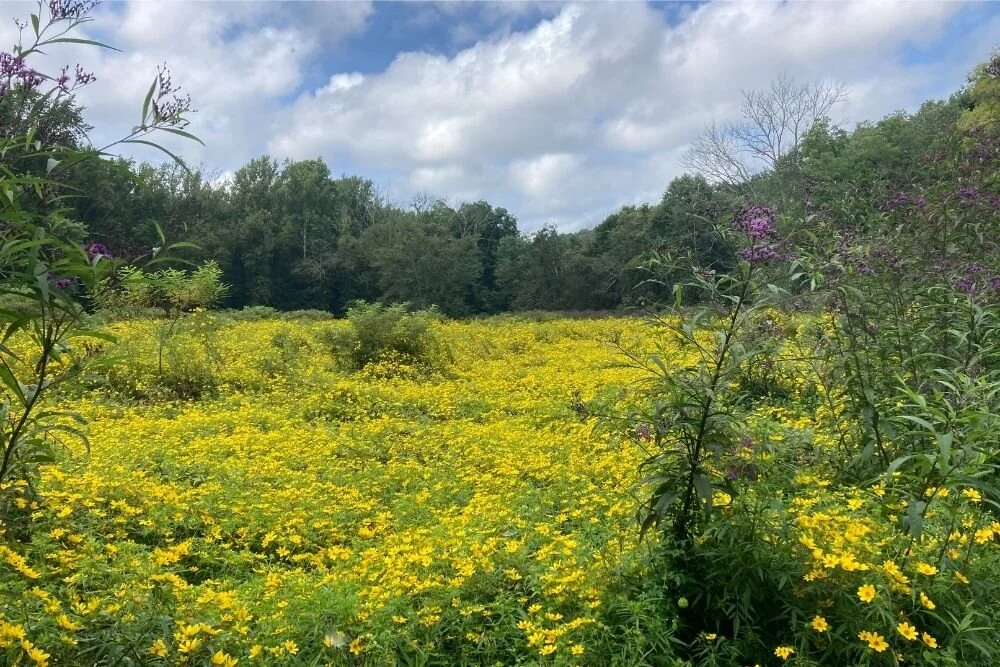
The native wildflowers in our lower meadows are in peak bloom, and members and visitors are invited to enjoy the flowers and see ecosystem management in action by touring the meadows during daylight hours.

Narrowleaf Silkgrass
Narrowleaf Silkgrass – Pityopsis graminifolia – is a perennial member of the Aster (Asteraceae) family. It does very well in our region, unless you pamper it, fertilize it, give it rich soil, and otherwise coddle it! This plant attracts pollinators and is often used in xeriscape gardens to reduce erosion.

Deerberry
Deerberry is a blueberry that comes not only with delicate spring flowers and intense red-maroon fall color, but also with tart, intense-flavored wild blueberries in late summer. Plus, deerberry flowers provide nectar for many insect species, including many bee species, as well as various butterfly species. To say this species attracts many pollinators would be an understatement!

Bluestem Goldenrod
Bluestem Goldenrod is a garden favorite for its purplish/blue stems and leaves and clusters of flowers. The quality of the leaves/stem color and the way the blooms are held along the stems also make this a favorite for cut flowers. Plus, pollinators love it!

Rusty Blackhaw Viburnum
Common on the slopes of Lookout Mountain, this hardy large shrub/small tree is easily mistaken for dogwood in the winter with its similar bark. It features exceptional fall color, edible fruit, and a beautiful form.
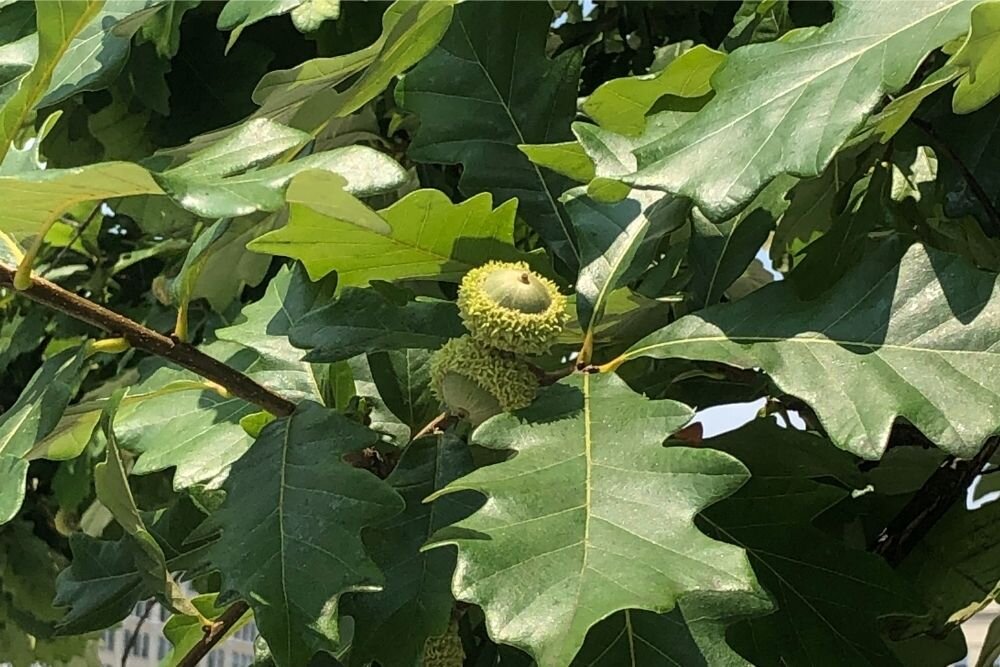
Swamp White Oak
Swamp White Oak – Quercus bicolor – is a deciduous, medium-tall tree from the Beech (Fagaceae) family. As an oak, this tree falls into another category as the number one Genus for supporting Lepidoptera (butterflies and moth) and is critical to supporting declining species in that Genus, not to mention many bird species that depend on Lepidoptera for their food.

Slender Mountain Mint
Slender Mountain Mint – (Pycnanthemum virginianum) is an herbaceous, fragrant perennial and is a member of the Mint (Lamiaceae) family. It is a garden workhorse, producing prolific blooms for pollinators and you to enjoy.

Garden Phlox
Garden Phlox – Phlox paniculata – prized for its billows of sweetly fragrant blooms, should be a staple for anyone desiring long-lasting, trouble-free garden color in the mid-summer months. This plant is particularly appealing to butterflies and hummingbirds and also tolerates grazing by deer.

Tickseed (Coreopsis)
Tickseed – Coreopsis spp.- is a massive genus with many species and many cultivars and varieties within those species. It is a member of the Aster (Asteraceae) family, is perennial (sometimes annual), and native to all of the Americas; North, Central and South America.
Coreopsis provides a superb ground cover for yards as well as a cover for denuded or eroded areas.