
Red Buckeye
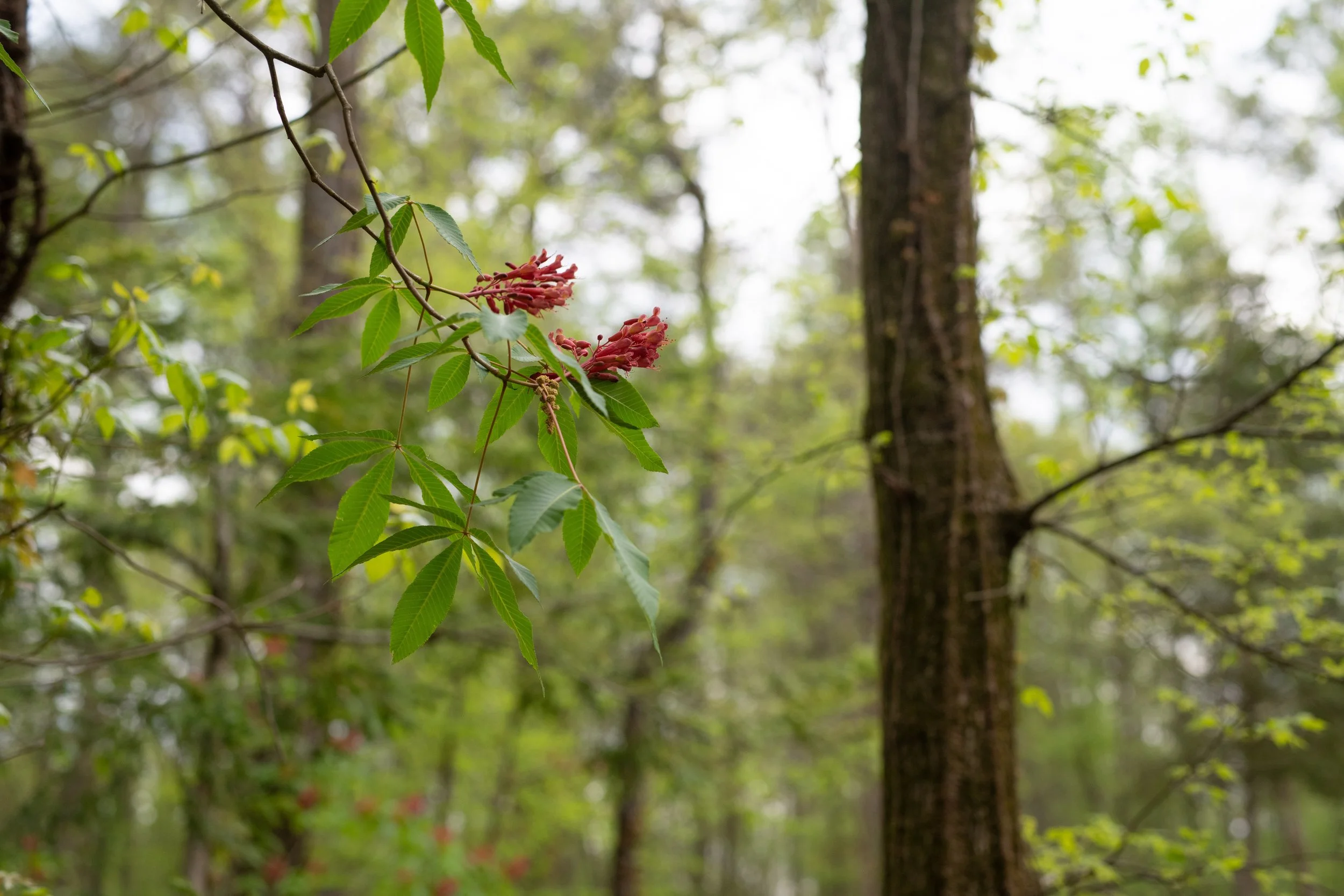
The Red Buckeye is a small ornamental, deciduous tree, known for its distinctive red flowers in spring and shiny 'buckeye' seeds in the fall. Typically 15-20 feet tall, you can find this plant in shady woodland borders or in the understory below larger trees across the southeast.
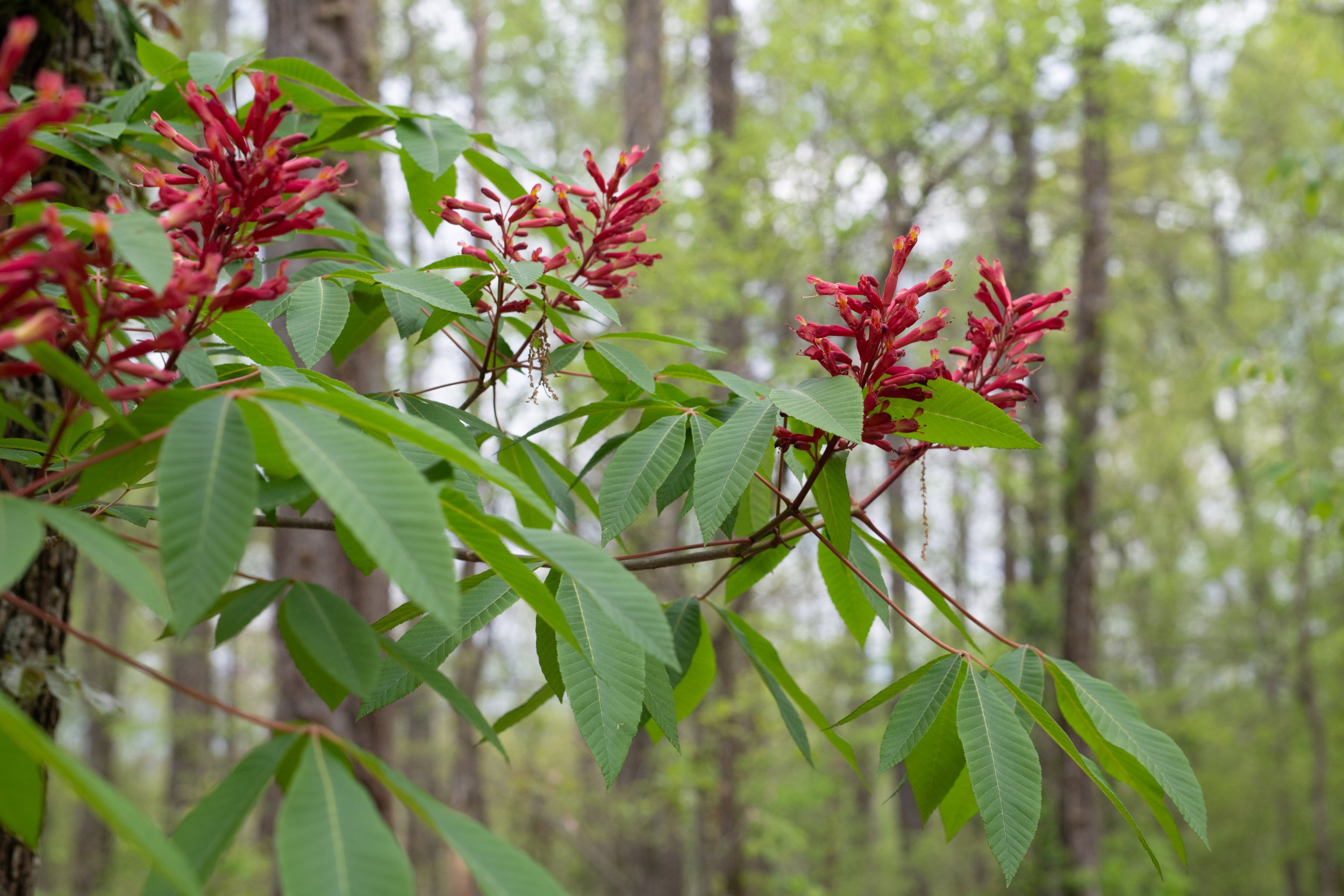
Scientific Description:
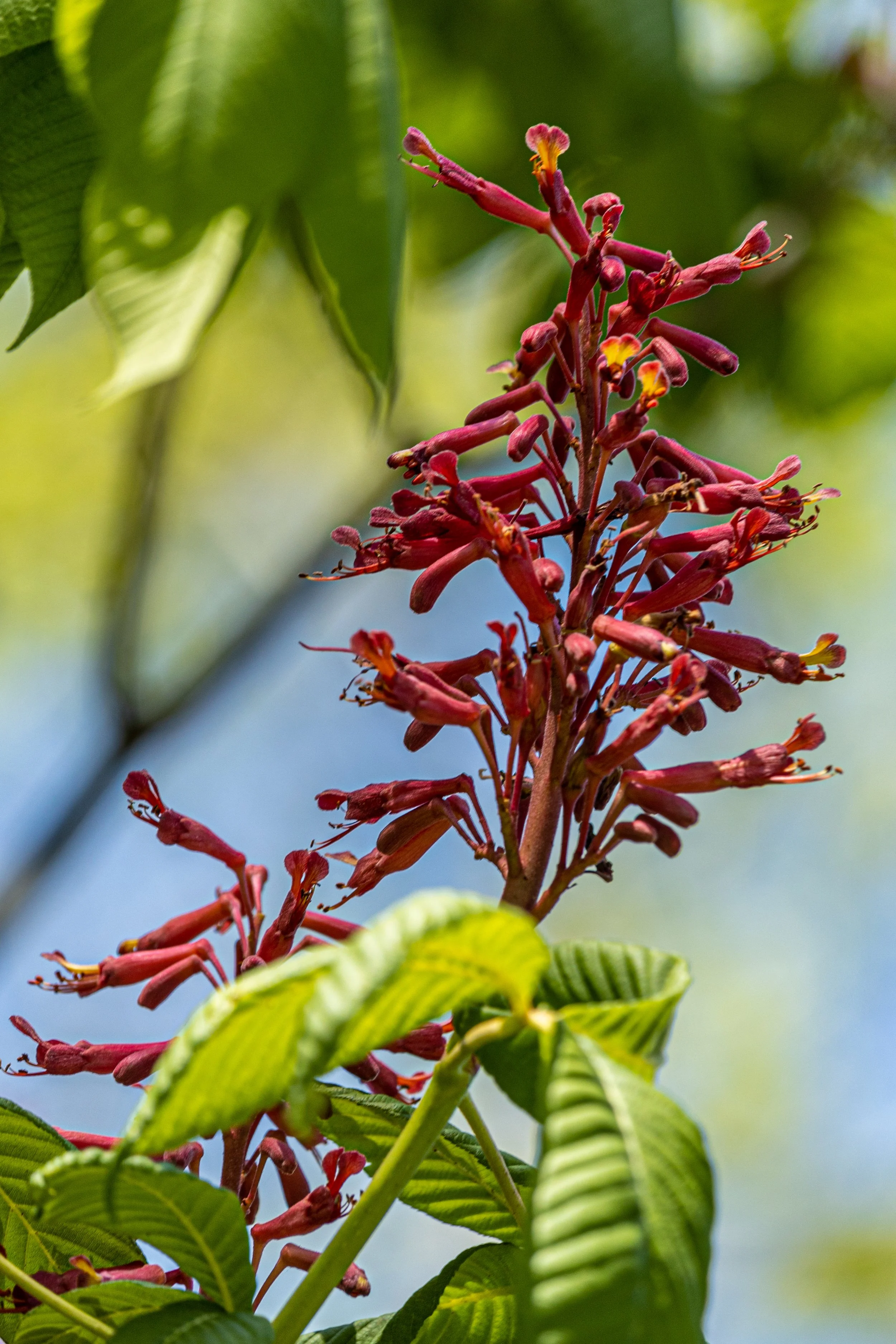
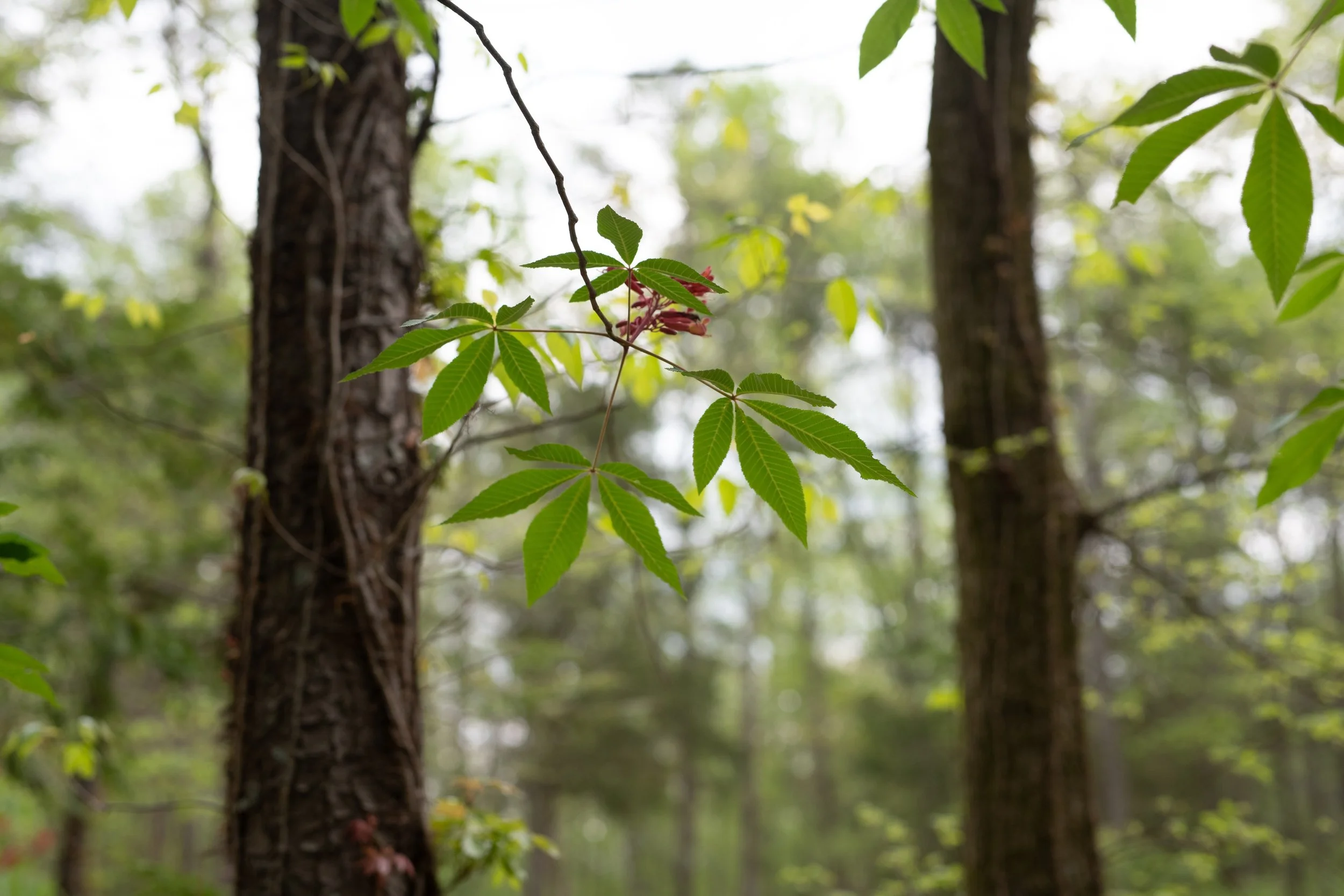
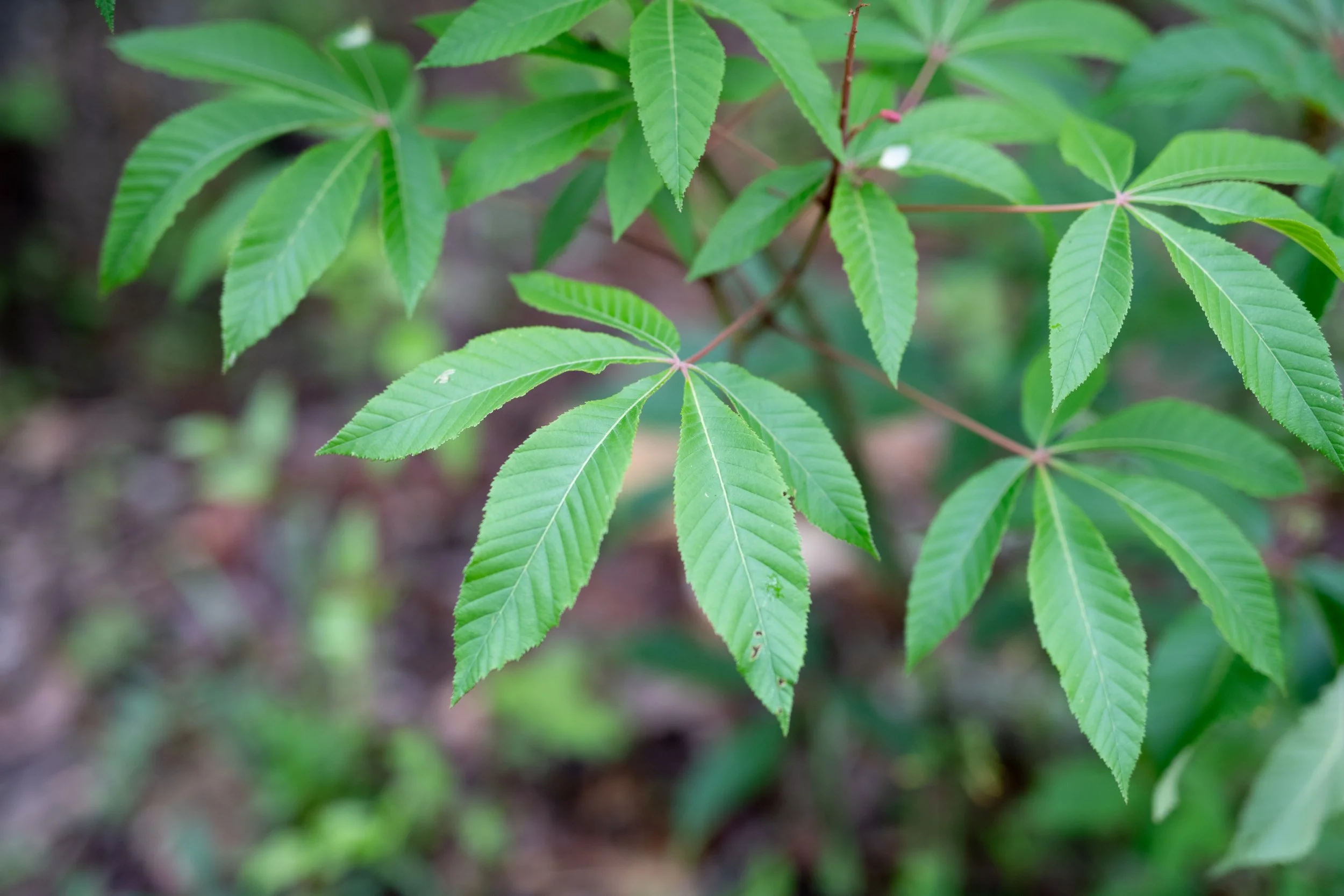
Aesculus pavia is in the Sapindaceae, or Soapberry, family. The red campanulate flowers bloom in large clusters nearly 1 foot long. The palmate leaves are a dark, glossy green. Usually occurring in sets of 5, the leaflets are elliptic to ovate, pointed at the tip, toothed, smooth on the upper surface, and paler and finely hairy on the lower surface. Its leaves drop early in the fall, revealing smooth, light gray to brown bark on young, often multi-stemmed trunks, which becomes slightly scaly with age. The large and shiny seeds are encased in a spherical leathery capsule in groups of 2 or 3, resembling the eye of a buck!
Habitat Value:
As one of the first plants to bloom in the spring, Red Buckeye is an important source of energy for wildlife. Its red, tubular flower clusters are highly attractive to ruby-throated hummingbirds and other pollinators. The seeds are poisonous to humans, but loved by squirrels!
There is a long history of humans using Red Buckeye for other purposes. Native Americans used crush seeds to stupefy fish, making them easier to catch. The saponins in the plant's roots can also be made into soap, and the wood can be used to produce black dye.
Landscape Use:
The Red Buckeye is versatile and low maintenance, making it a great element in any native garden. It thrives in part sun and rich moist soil, and typically grows 15-20 feet tall with a naturally compact, rounded form. This small red-flowering tree shines as the focal point of small shade gardens. It also provides a structural element in the understory or border of larger woodland gardens. Its dense summer foliage drops early fall, revealing smooth grey/brown bark. Whatever its use in the landscape, the red buckeye provides striking year-round interest in any shade garden.